- 17 Jan, 2026
Most airports are a means to an end, a holding room between where you are and where you'd rather be. You tolerate them. You endure queues, wrestle with confusing signage, survive overpriced sandwiches, and count down the minutes until boarding. Then there is Singapore Changi Airport, and it plays by an entirely different rulebook.
Here is the airport that has been voted the World's Best Airport by Skytrax thirteen times, including an unprecedented eight consecutive wins from 2013 to 2020 and again in 2023 and 2025. Here is the airport with the world's tallest indoor waterfall, a 12-meter indoor slide, a rooftop swimming pool overlooking the runway, butterfly gardens, free cinema screenings around the clock, and a jungle of real trees inside its terminals. In 2025, it handled 69,980,000 passengers, the highest in its 44-year history, and still managed to maintain an immigration clearance experience that most international travelers describe as the smoothest they have ever encountered.
But knowing that Changi is extraordinary and honestly, sort of navigating it like someone who belongs there, are two pretty different things. Whether you’re arriving for the first time, transiting for several hours, or leaving on a long-haul flight, this guide is like your full terminal-by-terminal reference, made from verified data, official airport sources, and also updated on-the-ground intelligence—so you can stop guessing and start experiencing Changi the way it was meant to be enjoyed.
The Big Picture: What You Are Walking Into
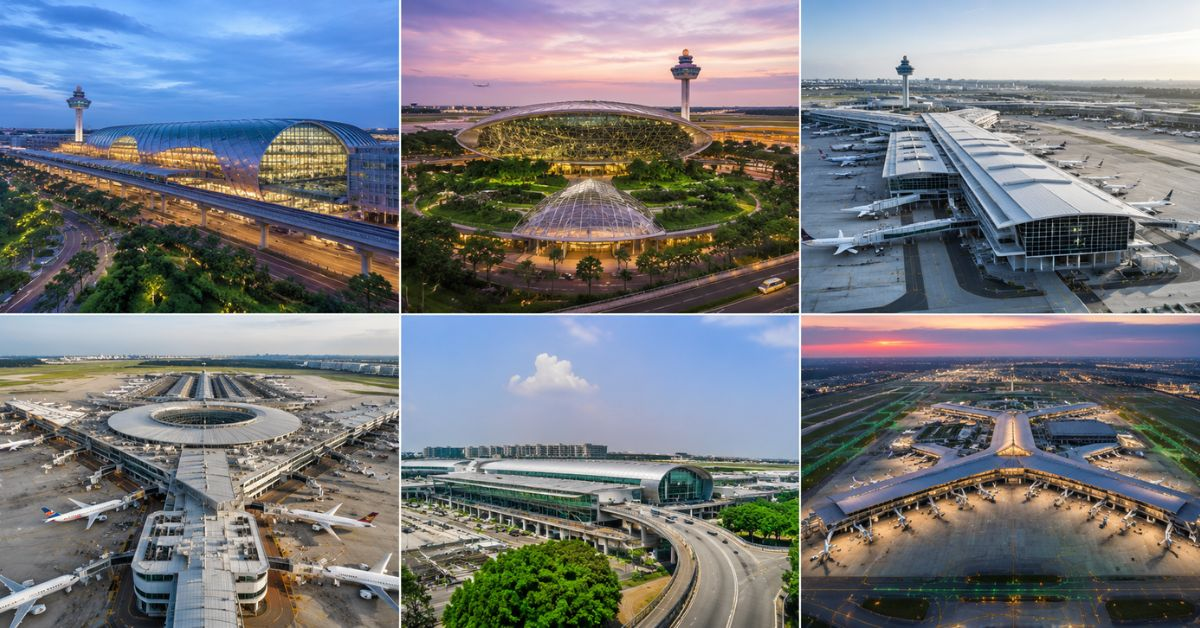
Before diving straight into every terminal, try to grasp the scale of what you’re really facing. Changi Airport is on the eastern side of Singapore, about 24 kilometers away from the Central Business District. The whole complex covers around 25 square kilometers, and today it runs four passenger terminals—T1, T2, T3, and T4, plus Jewel Changi Airport, which is a separate mixed-use setup that basically becomes the emotional and architectural center of the entire place.
Terminals 1, 2, and 3 are physically connected, and they’re linked right to Jewel. Terminal 4 is sort of separate, and you get there via a complimentary shuttle bus, which is easy enough. The airport deals with more than 100 airlines that connect to 170 cities across 100+ countries, and it pushes roughly 7,000 flights each week, so that’s about one flight every 80 seconds, give or take. Just in 2025 alone, Changi picked up 28 “Best Airport” awards, and it also crossed 700 total accolades since it opened.
Understanding this layout before you arrive is not a small thing. Changi is large enough that the difference between knowing your terminal and not knowing it can cost you twenty minutes or more — which matters considerably if you are on a tight connection.
Changi Airport Terminal 1 - Singapore
Terminal 1 opened in July 1981 as the airport’s founding terminal, built in a distinctive H shape to maximize gate space, and well, that was the whole idea. It became the original benchmark against which basically every later Changi development got measured, and even after four decades of innovation, it still feels like a genuinely compelling place to just pass time before your flight, you know.
When it comes to airlines, Terminal 1 is the home for a lot of oneworld alliance carriers: British Airways, Japan Airlines, Qatar Airways (which returned to T1 in October 2018), Air France, KLM, Turkish Airlines, and Qantas all operate from here. If you’re travelling on any of these carriers, then T1 is your whole world for the duration of your time at Changi
What really makes T1 stand out experientially is kind of a bundle of free attractions that most airports would charge you for quite handsomely. The Kinetic Rain Sculpture, for example, is this mesmerizing art installation with 1,216 bronze droplets suspended from motorized cables, kind of choreographed so they mimic the fluid motion of rainfall and flight at the same time. It’s the sort of thing that makes you stop mid-stride, when you first spot it, honestly.
Then the terminal has the Tropical Rainforest Vivarium as well, with more than 50 species of flora and nearly ten species of fauna. There’s also the Water Lily Garden, which includes the largest aquatic plant on Earth, the Victoria amazonica, spread across a calm pond like a quiet little oasis.
If you’re needing a breather or just freshen up a bit, the Aerotel Airport Transit Hotel runs fully inside the airside transit area, and it’s one of those places people keep bringing up again and again, at almost any international airport. You can get private rooms; there’s an around-the-clock reception service; and most notably, an outdoor rooftop swimming pool plus a jacuzzi with direct runway views. Even if you are not planning to sleep there, you can pay a day use fee just to access the pool. Honestly, there’s very little else in global aviation that feels quite like it.
For the lounge setup, T1 has the SATS Premier Lounge, which you can access via Priority Pass and DragonPass and also by pay per entry. It’s consistently talked about because of the hot buffet selection, with local Singaporean comfort foods like laksa and chicken rice, plus shower facilities that have really strong water pressure. There are also Osim massage chairs, so it’s a bit of a wow factor. The lounge feels roomy, it runs 24 hours a day, and you can reach it from T2 and T3 using the inter-terminal Skytrain.
Changi Aiport Terminal 2 - Singapore
Terminal 2 was the second terminal to open at Changi, at the end of 1990, built adjacent to its predecessor. After an extensive renovation and partial closure period, it reopened fully on 1 November 2023, and the rebuilt experience is a significant leap forward from what was there before.
Speaking at the reopening, Changi Airport Group’s Terminal 2 Programme Director said, "T2 is kind of an attempt to bring together a modern terminal, inspired by nature." Plus immersive digital experiences, innovative technology, and a more transformative retail and dining mindset. The idea is to create a genuine sense of place, and honestly, it seems to have landed with a bit of conviction.
The terminal now shows off the Wonderfall, a floor-to-ceiling digital waterfall installation of considerable scale, and then there is Dreamscape, an immersive indoor garden moment where a real-time digital sky shifts color based on the hour you’re there. So you can watch it move from morning blue to late-afternoon amber and then into the deep indigo of early evening.
Airlines that are operating from T2 cover Singapore Airlines flights to some select places across Asia, for instance, South Korea, Japan, Nepal, Maldives, and Bangladesh. Also, Malaysia Airlines, Silk Air, and a few other nearby carriers operate from the same terminal, more or less. The Changi Airport MRT Station (CG2) is actually positioned between Terminals 2 and 3, so T2 ends up being one of the simplest terminals to get to for city center transit.
For folks using Priority Pass or pay-per-use lounge access, T2 has both the SATS Premier Lounge (Level 3, Departure Transit Hall, near Gate E5) and the Ambassador Transit Lounge. This one is open 24 hours, and it comes with private nap suites, gym utilities, shower rooms, and workstations. The nap suites aren’t huge, but they are usable and really come through for overnight connections.
A particularly unusual amenity sits just outside T2: the GoCycling bicycle rental facility. Transit passengers who have cleared immigration are entitled to two hours of complimentary bike rental to explore the surrounding Changi area—a genuinely rare offering from an international airport and a memorable way to spend a long layover if the weather cooperates.
Changi Aiport Terminal 3 - Singapore
Terminal 3 is the airport's most facility-rich terminal and the primary home of Singapore Airlines' long-haul network. If you are flying SIA to Europe, Australia, North America, the Middle East, or Africa, chances are you will pass through T3. It is also home to Cathay Pacific's long-haul departures, among others.
The physical scale of T3 is kind of ambitious, honestly. Its soaring ceilings and massive departure halls are framed by natural light and greenery in a way that makes being in the terminal feel genuinely restful, rather than just functional. The basement food court is one of the busiest places in the airport, open 24 hours, where you can get authentic Singaporean dishes with prices that stay within reach for all passenger categories: nasi lemak, chicken rice, laksa, Hainanese cuisine, and then a rotating set of regional favorites too.
The Butterfly Garden on the upper level is about a 200 square meter enclosed ecosystem, with live butterflies moving around amid lush tropical planting. It’s quieter than most airport attractions, and it works best around mid-morning when butterfly activity is at its peak. If you want to walk through properly and not rush it, plan around 15 to 20 minutes.
T3’s most talked-about draw is The Slide@T3, a 12-meter indoor slide, and yes, it has the distinction of being the tallest airport slide in the world. You can book it free of charge via the Changi Airport mobile app, and that setup lets you grab up to ten vouchers per day per user. There’s also Climb@T3, which is basically an indoor climbing wall that works for both children and adults, plus there’s a dedicated movie theater with reclining seats and a 24-hour rotating schedule of films. The best part is that it’s free and open to any passenger, no reservation needed, no fuss.
If you’re one of those travelers who need a hotel stay, Crowne Plaza Changi Airport is directly connected to T3. It’s also been voted the World’s Best Airport Hotel ten consecutive times by Skytrax from 2015 to 2025, except 2021. With 563 soundproofed rooms and a direct walkway into the terminal, it’s the single best choice for passengers who want a full-service hotel vibe during a long connection or a very early departure.
The lounge ecosystem at T3 is the most robust in the airport. The SATS Premier Lounge T3 (renovated mid-2024) is widely regarded as the best pay-per-use lounge option at Changi, with a larger footprint than its T1 and T2 counterparts, superior hot food variety, and consistent reviews across Priority Pass and DragonPass platforms. The SilverKris First Class Lounge at T2, accessible from T3 via Skytrain, reopened in November 2025 with over 1,000 square meters of space, à la carte dining, and private shower suites.
Changi Airport Terminal 4 - Singapore
Terminal 4 is the newest of Changi's operational terminals, opened in October 2017, and it operates on a fundamentally different philosophy from its siblings. It is compact, automated, and — by the standards of what surrounds it — relatively quiet. Its processes are built around self-service and biometric technology, with fast and automated check-in kiosks, automated bag drops, and self-boarding gates that have made it a reference point for airport technology globally.
The airlines at T4 are mostly budget and regional types, with Cathay Pacific, AirAsia, Korean Air, and a bunch of Southeast Asian low-cost carriers going out from here. It deals with quite a lot less passenger flow than T1 to T3, so security lines tend to move quicker, and the whole vibe of the terminal is a bit more unhurried and relaxed in general.
One logistical thing to get straight in your head: T4 is not connected with Changi’s Skytrain system. So to shift between T4 and the other terminals, you have to take the free shuttle bus. It shows up regularly, and the trip usually lands around 10 to 18 minutes, depending on which way you’re headed and what time it is. If you’re making a transfer between T4 and any other terminal, plan for it early—keeping a minimum of 90 minutes for connections that involve T4 is a practical working guideline.
On the lounge front, T4 has a single Priority Pass option: the Blossom Lounge, a collaboration between SATS and Plaza Premium located in the Departure Transit Hall, Level 2M. It punches above its weight for a single-lounge terminal, offering catering services, showers, a hospitality area with massage, manicure, and pedicure services, and a bar. It operates 24 hours daily and tends to be less crowded than the multi-lounge terminals, which is its own form of luxury. The Cathay Pacific Lounge, designed by Studioilse and seating up to 210 guests, is the premium airline lounge in T4 and is exclusively accessible to oneworld members.
Jewel Changi Airport—When an Airport Becomes a Destination
No guide to Changi would be complete without addressing Jewel, the extraordinary 135,700-square-meter mixed-use complex that opened in April 2019 and has reshaped the entire meaning of what an airport experience can be.
Jewel is not technically a terminal; it has no check-in facilities or departure gates, but it is directly connected landside to Terminals 1, 2, and 3. The centerpiece is the HSBC Rain Vortex, the world's tallest indoor waterfall at 40 meters, cascading from the roofline through seven stories of lush indoor forest. An evening light and sound show transforms the spectacle into something closer to performance art. The Guinness World Records officially recognizes the Rain Vortex as the tallest indoor waterfall on the planet.
Above the waterfall experience, the Canopy Park on Level 5 offers walking nets suspended over the forest, bouncing nets, mirror mazes, fog-filled hedge mazes, and sky nets — a tiered set of recreational experiences that are extraordinary in the context of an airport. Across all five levels, Jewel houses more than 280 retail and dining outlets, ranging from casual food courts to mid-range restaurants to premium dining. The YOTELAIR Changi hotel operates within Jewel, with rooms bookable by the hour or overnight, and the Changi Lounge at Level 1 offers a landside lounge experience accessible before clearing security — particularly useful for passengers arriving early or waiting for hotel check-in after landing.
One critical detail for transit passengers: Jewel is landlocked. If you are transiting without clearing Singaporean immigration, you cannot access it. To visit Jewel during a layover, you must clear arrival immigration, which requires ensuring you have the appropriate entry permissions for Singapore, if applicable, and sufficient time for the round trip.
Getting to and from the City
Changi is located approximately 20 kilometers east of Singapore's Central Business District, and the city offers one of the most efficient airport transport systems anywhere in the world.
The MRT (Mass Rapid Transit) is the most cost-effective option and among the most reliable. The Changi Airport MRT Station (CG2) sits in the basement level between Terminals 2 and 3. From here, ride to Tanah Merah (EW4) and transfer to the East-West Line, or go one stop to Expo (CG1/DT35) and transfer to the Downtown Line; both routes reach central Singapore in approximately 30 to 40 minutes. The fare to Raffles Place or City Hall runs around SGD 2.07. Passengers from Terminals 1 or 4 should take the Skytrain or shuttle bus, respectively, to reach the MRT station. You can pay using a contactless Visa or Mastercard, mobile wallet, or an EZ-Link card purchased from the Changi Recommends store at the airport. The Singapore Tourist Pass, available via EZ-Link's website, offers unlimited MRT and bus travel for 24, 48, or 72 hours and is worth considering if you plan to move around the city frequently during your stay.
For taxis, metered cabs are available 24 hours outside every terminal. An airport location surcharge applies: SGD 8 between 5:00 pm and 11:59 pm, and SGD 6 at all other times, on top of the metered fare and any peak-hour surcharges. A typical cab fare to the central city runs between SGD 25 and SGD 40. Grab, Singapore's dominant ride-hailing platform, operates from designated pickup zones at each terminal and often prices competitively against traditional taxis, particularly during off-peak hours.
Pre-booked transfers can be arranged via Changi's Ground Transport Concierge (GTC), open 24 hours in each terminal, offering fixed-price rides of SGD 55 (four-seater) or SGD 60 (six-seater) to any destination in Singapore.
Key Data at a Glance
|
Terminal |
Key Airlines |
MRT Access |
Notable Facilities |
|
T1 |
British Airways, Japan Airlines, Qatar Airways, Air France, KLM |
Via Skytrain to T2/T3 |
Kinetic Rain Sculpture, Aerotel pool, SATS Premier Lounge |
|
T2 |
Singapore Airlines (select routes), Malaysia Airlines |
Direct — CG2 station |
Wonderfall, Dreamscape, Ambassador Transit Lounge |
|
T3 |
Singapore Airlines (long-haul), Cathay Pacific (long-haul) |
Direct — CG2 station |
The Slide, Butterfly Garden, Crowne Plaza Hotel |
|
T4 |
Cathay Pacific, AirAsia, Korean Air |
Shuttle bus to T2/T3 |
Blossom Lounge, Cathay Pacific Lounge, self-service automation |
|
Jewel |
N/A (non-terminal) |
Via T2/T3 or T1 landside |
Rain Vortex, Canopy Park, 280+ retail & dining outlets |
What the Numbers Tell You
|
Metric |
Data |
|
Annual passengers (2025) |
69,980,000 |
|
Annual cargo (2025) |
2,080,000 tonnes |
|
Airlines served |
100+ |
|
Destinations connected |
170 cities, 100+ countries |
|
Weekly flights |
~7,000 (one every 80 seconds) |
|
Skytrax World's Best Airport titles |
13 |
|
Total awards since opening |
700+ |
|
Height of Rain Vortex (Jewel) |
40 metres |
|
Crowne Plaza "World's Best Airport Hotel" wins |
10 |
|
Terminal 5 projected capacity |
50 million passengers per annum (mid-2030s) |
Sources: Changi Airport Group Official Records, Wikipedia (Changi Airport), Skytrax, OAG, Aviation Week Network
The Future of Changi Airport Terminal 5 - Singapore
Changi is not resting. In May 2025, Singapore's Prime Minister Lawrence Wong officiated the groundbreaking ceremony for Terminal 5, which will be built on reclaimed land east of the existing terminals. T5 is designed to handle 50 million additional passengers annually, increasing total airport capacity from roughly 90 million to 140 million passengers per year. The architectural team includes KPF Singapore, Heatherwick Studio, and Architects 61. It will be built as a Green Mark Platinum Super Low Energy Building, integrating solar power and sustainability principles into its core design. The terminal is expected to be operational in the mid-2030s and will connect seamlessly to existing terminals to function as a single integrated hub.
Upon completion, Changi aims to connect Singapore to 200 cities globally, up from 170 today — a goal that reflects Singapore's ambition to remain one of the world's primary aviation crossroads in an era of rapidly growing Asia-Pacific travel demand.
Your Practical Pre-Flight Checklist
Before you arrive at Changi, a few things are worth confirming: Know your terminal in advance, as alliance groupings are not always consistent and airlines occasionally operate from more than one terminal. Build in at least three hours for international departures to comfortably accommodate check-in, immigration, security, and the very real possibility that you will want to explore. If your layover exceeds five and a half hours, you are eligible for the Singapore Free City Tour offered to qualifying transit passengers — a 2.5-hour guided experience covering central Singapore landmarks, available through the Singapore Tourism Board's transit programme. Download the Changi Airport mobile app before departure to access free vouchers for The Slide@T3, navigate terminal facilities, and track your flight in real time.
For overnight layovers, the Aerotel in T1, Ambassador Transit Lounge in T2/T3 (which offers private nap rooms from SGD 120 for six hours), and Crowne Plaza in T3 are your three best options, each suited to a different budget and comfort expectation. For connections involving T4, always add 20 minutes of buffer time for the shuttle bus and a slightly longer security processing approach compared to the other terminals.
In Closing
The word "layover" implies waiting. At Changi, what it actually means is time — time that the airport has worked extraordinarily hard to make interesting, comfortable, and occasionally remarkable. Whether you spend it swimming above a runway, walking through a butterfly garden, watching a waterfall 40 metres high, or simply eating a perfect bowl of laksa in a basement food court at two in the morning, Changi has done something that almost no other infrastructure on earth has managed: it has made you glad you had a connection. Now you know which terminal you are in, what is there, how to move between them, and how to reach the city beyond them. The rest is yours to discover.
Frequently Asked Questions(FAQ's)
Ans: Changi Airport in Singapore has four passenger terminals in total—T1, T2, T3, and T4. Right next to them is Jewel Changi Airport, a stunning lifestyle and entertainment hub connected to Terminals 1, 2, and 3, known for its attractions, shopping, dining, and the HSBC Rain Vortex.
Ans: Terminal 3 is home to the Butterfly Garden, one of Changi Airport's best-loved attractions. Step inside and you'll find hundreds of live butterflies fluttering around a lush, tropical setting—a peaceful little escape between flights.
Ans: The Changi Airport MRT station is located between Terminals 2 and 3. If you're arriving at Terminal 1, just hop on the Skytrain to reach it. If you are arriving at Terminal 4, simply catch the complementary shuttle bus connecting the terminal to the MRT station.
Ans: The HSBC Rain Vortex is a 40-meter-tall indoor waterfall located at the center of Jewel Changi Airport. Surrounded by a lush indoor forest, it's a breathtaking sight by day and even more magical at night, when it transforms into a dazzling light and sound show.
Ans: Changi Airport has plenty of free attractions to enjoy, including the Butterfly Garden, the mesmerizing Kinetic Rain sculpture, a movie theatre, the Water Lily Garden, and the Tropical Rainforest Vivarium. You can even try The Slide@T3, though it may have eligibility requirements or voucher conditions, so it's advisable to check the latest access information before your visit.