- 16 Apr, 2026
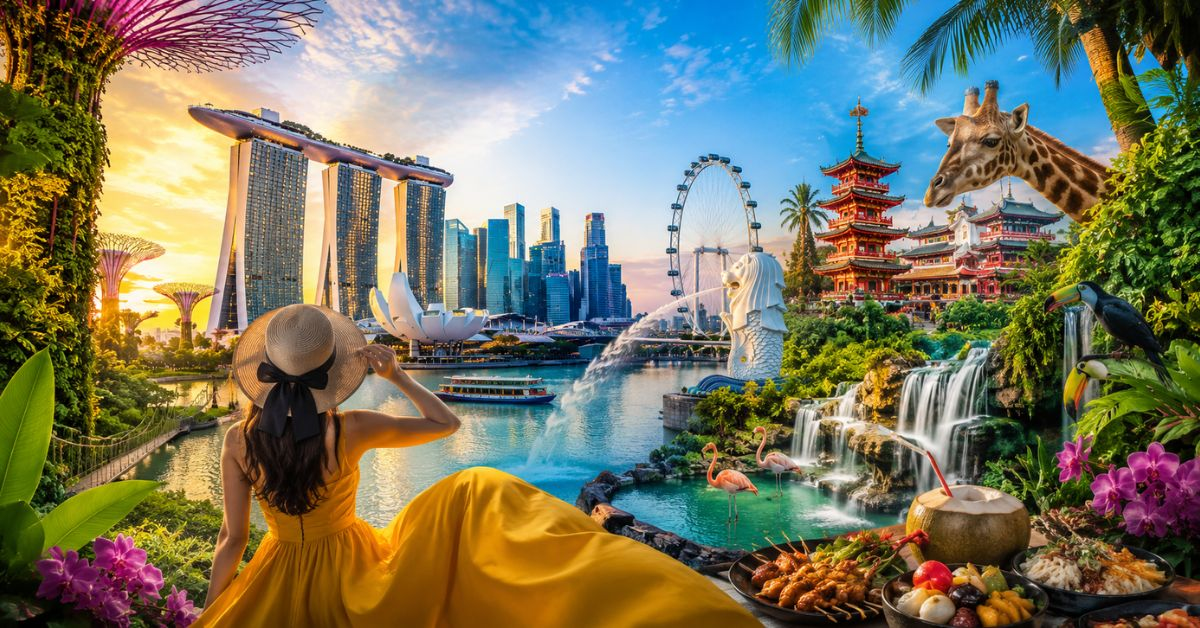
A country that holds a reputation for being one of the safest cities in the world, Singapore gives a rich multicultural aspect to travelers. While Singapore is considered one of Asia's smallest countries, it never fails to deliver an extraordinary experience.
Imagine yourself standing where you never expected you could be; it can be inside a waterfall or a hawker stall surrounded by three generations of family standing together having dinner. With only one thought coming: I had no idea life could be like this here.
Singapore is usually just known for its cleanliness, but it's more than that. One will never forget the way Indian temple gopurams rise above shophouses painted in faded colonial pastels. The smell of kaya toast in the mornings with 30ºC and the surreal geometry of the skyline reflected on Marina Bay water at dusk. This city, in 60 years, has built something genuinely that you are unlikely to find anywhere else.
A 4-day trip to Singapore won't surely exhaust you. But you will leave this city with a bucket full of memories, adventure, serenity, and a wish to visit again.
Day 1: Roots and Revelations: Chinatown, Tanjong Pagar & The CBD:
Start your exploration with Sri Mariammman Temple on the South Bridge. Try to reach before 9 am, when the lights are still low, and you will also be able to attend the morning prayers. This temple was built in 1827 by Tamil immigrants and is also Singapore's oldest Hindu temple. The gopuram, a tower encrusted with hundreds of deities painted, is considered one of the most enchanting sights.
One doesn't need to enter the temple to feel its presence: simply just standing on the pavement opposite it, with Chinese clan houses to your left and the Masjid mosque a street away, tells you everything about the beliefs and diversity of the city.
Walk south toward Tanjong Pagar, which used to be a Malay fishing village, then became the heart of Singapore’s Cantonese community. Now is a neighborhood where old coffee shops are breathing under shiny new apartments. Take a stop at any kopi tiam for the proper breakfast, not a “whatever is open” thing: kaya toast (coconut jam on charcoal-grilled bread), soft-boiled eggs cracked into a saucer with dark soy and white pepper, and kopi-o, the black coffee with sugar that is brewed through a cloth sock. It’s not some staged tourist act; this is how breakfast in Singapore has been eaten for well over a century.
Afternoon in Singapore only belongs to the CBD and Marina Bay. Walk the waterfront promenade and let the skyline slowly build itself around you. The Helix Bridge at midday is straight up photogenic, in that “stand here and just… shoot” way. By 4pm, head into Gardens by the Bay, not for tick-box stop, but to have a real experience. The Supertrees are best to visit hours before sunset, when the steel and plant structures start glowing an amber kind of light. The Cloud Forest, a glass dome with a 35-metre indoor mountain wrapped in tropical plants and mist, is one of those indoor spaces that feels unreal, even after you’ve seen photos.
Complete your day with dinner at Lau Pa Sat, a Victorian cast-iron market hall that doubles as a hawker center. Order satay from the outdoor grill, cold bear, and see the city slowly falling into peaceful slumber around you.
Day 2: The East: Katong, Geylang Serai & Changi Village
On the 2nd day of your trip, visit where the Peranakan soul lives.
The Peranakan (also known as Straits Chinese) are the descendants of 15th-century Chinese immigrants who married Malay locals, which created a hybrid culture with its own language (Baba Malay), plus food ways, architectural rhythms, and craft traditions that feel wonderfully specific. Katong is their heartland. If you go early, try walking East Coast Road then Joo Chiat Road, where those terrace houses painted in turquoise, coral, and mustard are dressed up with hand-painted tiles plus carved timber shutters. You can even slip inside Kim Choo Kueh Chang for kueh, like Peranakan sweets and cakes, and a small “lesson” on beaded slippers that are hand-stitched over months.
For lunch in Katong, it’s pretty much one thing: Katong laksa. This Malaysian noodle soup is not the same as the rest, with shorter noodles, a deeper coconut milk broth, and whole cockles. The places nearby keep trading stories and arguing about who first made it, like it’s been going on for decades. The argument is part of the experience too.
Visiting Geylang Serai Wet Market late in the afternoon gives you sensory heaven just by walking into it: fresh spices, whole fish, dried goods, and that controlled chaos you get during serious grocery shopping. Geylang itself, Singapore's most misunderstood district, is where the durian stalls run late into the night. If you haven’t eaten the “King of Fruits” yet, this is the moment. The smell is confronting; the taste… Well, it’s a revelation.
Then end your day in Changi Village, near the island’s eastern tip, where the pace slows down. A bumboat over to Pulau Ubin is optional but worth it, that small island is a preserved part of 1960s Singapore, full of kampung houses and jungle pathways. Come back for dinner at the Changi Village hawker center; the Nasi Lemak there (wrapped in banana leaf) is among the finest in Singapore.
Day 3: Culture and Contrast: Little India, Arab Street & Orchard Road
Little India hits a different cord as compared to Chinatown. Chinatown has been partially redeveloped into a tourist zone; Little India retains its authentic image. Serangoon Road on weekday mornings is full of jasmine garland sellers, goldsmiths, textile merchants, and the fragrance of incense from Sri Veeramakalimman Temple, built in 1881.
Spent some time in Mustafa Center before visiting Tekka Center, which is within walking distance to the north, where you can taste some of the best Indian delicacies. Arab Street and Kampong Glam are at a short walking distance. The Sultan Mosque, with a golden dome, anchors the area that goes into Hajj Lane, a single-lane street and one of the most photographed alleys.
Spend your evening in Orchard Road, Singapore's luxury retail corridor, which is more about the theater of the place. Then escape into Emerald Hill, where the Peranakan terrace houses have been converted into bars. The 5&Dime bar and its old-neighborhood atmosphere.
Day 4: Sentosa, Southern Ridges & One Last Meal:
On your last day you will need pace and the right decision.
Sentosa Island is Singapore's resort zone—Universal Studios, beach clubs, and cable cars. Palawan Beach at low tide of a rickety footbridge going out to a small rock islet, which is the southernmost point of continental Asia. Where you can just sit with it for a while.
The better slow morning, though, is the Southern Ridges, a 10 km trail that ties together three hilltop parks by way of raised walkways through secondary rainforest. The Henderson Waves Bridge, that sculptural wooden crossing suspended about 36 meters over the valley, looks lovely, and it’s usually empty before 9am. The route finishes near HarbourFront, and then the whole southern coastline is laid out underneath you.
Grab your final meal at a hawker center. Maxwell Food Center in Chinatown and Old Airport Road Food Centre in Mountbatten both count. Have it the way the city deserves: slow and without rush.
Choosing the Right Stay in Singapore
Where you choose to stay can make a difference to how you experience Singapore. The city is well-connected by the MRT, but selecting the right stay and locality helps you save time and budget while you enjoy the scenic views of the city.
For Solo Travelers
If you’re traveling alone, aim for places close to MRT stations and the main attractions. Also, being in a well-populated area helps a lot, because it’s usually easier to run into other travelers and wander around on your own.
Best Areas:
- Chinatown
- Bugis
- Kampong Glam
These neighborhoods offer excellent connectivity, plenty of dining options, and a vibrant atmosphere that's ideal for exploring on your own.
For Female Travelers
Singapore is one of the safest travel destinations in Asia, so it has become a favorite among solo female travelers. Still, picking a properly reviewed hotel in a central spot can add that extra layer of comfort and ease.
Best Areas:
- Orchard Road
- Marina Bay
- Bugis
Look for properties with 24-hour reception, secure access, and easy access to public transport.
For Budget Travelers
Singapore really does not have to cost a fortune. If you are a budget traveler, you can still save a lot by choosing more affordable neighborhoods and then using the city’s superb public transportation network, which is honestly quite effortless once you understand it.
Best Areas:
- Chinatown
- Little India
- Geylang
These locations offer budget hotels, hostels, capsule stays, and easy access to affordable local food at nearby hawker centers.
For Family Vacations
Families often benefit from staying close to major attractions to reduce travel time and keep children comfortable throughout the trip. Hotels with pools, family rooms, and nearby dining options can make the experience even smoother.
Best Areas:
- Marina Bay
- Sentosa Island
- Orchard Road
- Clarke Quay
These areas provide easy access to family-friendly attractions, shopping, entertainment, and dining options.
Quick Tips Before Booking
Before finalizing your accommodation, make sure it is close to an MRT station, has positive recent reviews, and offers the amenities you need. Booking early often results in better rates, especially during peak travel seasons.
A well-chosen stay allows you to spend less time commuting and more time enjoying Singapore's iconic attractions, cultural districts, and culinary experiences.
Conclusion:
What makes Singapore truly special isn't just its famous landmarks—it's the seamless blend of innovation and tradition. One moment you're standing beneath futuristic Supertrees, and the next you're savoring generations-old recipes in a busy hawker center.
For travelers searching for a destination that is exciting, safe, culturally rich, and remarkably easy to navigate, Singapore proves that extraordinary experiences don't always require weeks of exploration. Sometimes, four unforgettable days are enough to leave a lasting impression and a camera full of memories.
Where colonial ghosts share pavements with vertical gardens, and a single city block can move you across three continents, Singapore refuses to be summarized.
Frequently Asked Questions(FAQ's)
Ans: Yes, four days and three nights is good enough to explore Singapore's major attractions—such as Marina Bay, Gardens by the Bay, Chinatown, Little India, Sentosa Island, and those famous hawker centres. With a well-planned itinerary, you can comfortably enjoy the city's culture, food, shopping, and iconic landmarks without feeling rushed.
Ans: On your first day in Singapore, you could visit Sri Mariamman Temple, walk around Chinatown and Tanjong Pagar, then head to Marina Bay. Cross the Helix Bridge and explore Gardens by the Bay and Cloud Forest. In the evening, have dinner at Lau Pa Sat, a popular hawker centre where you can try tasty local food and enjoy the lively night atmosphere.
Ans: Solo travelers should consider staying in Chinatown, Bugis, or Kampong Glam. These neighborhoods offer excellent MRT connectivity, affordable accommodation options, plenty of restaurants and cafés, and easy access to major attractions, making them convenient and enjoyable bases for exploring Singapore independently.
Ans: During a 4-day trip to Singapore, you should try local favorites such as kaya toast, Hainanese chicken rice, Katong laksa, satay, nasi lemak, and a variety of Indian dishes at Tekka Centre. If you're feeling adventurous, sample durian, often called the "King of Fruits," and explore Singapore's famous hawker centres for an authentic taste of the city's diverse culinary heritage.
Ans: In Little India, Kampong Glam, and Arab Street, you can explore colorful heritage streets, visit historic temples and mosques, shop for traditional textiles and handicrafts, admire vibrant street art, and enjoy authentic Indian, Malay, Middle Eastern, and halal cuisine. Don't miss landmarks like Sri Veeramakaliamman Temple, Sultan Mosque, Haji Lane, and Mustafa Centre for a complete cultural experience.