Singapore Changi Airport (SIN)
Singapore Changi Airport (SIN) is Singapore's main international airport located in the eastern district of Changi, nearly 25 kms northeast of the country's commercial city center. Also called one of the most important aviation gateways in the Asia-Pacific region, Changi airport is a base for more than 100 international carriers, connecting travellers to hundreds of destinations across Asia, Europe, the Middle East, Oceania, and Americas.
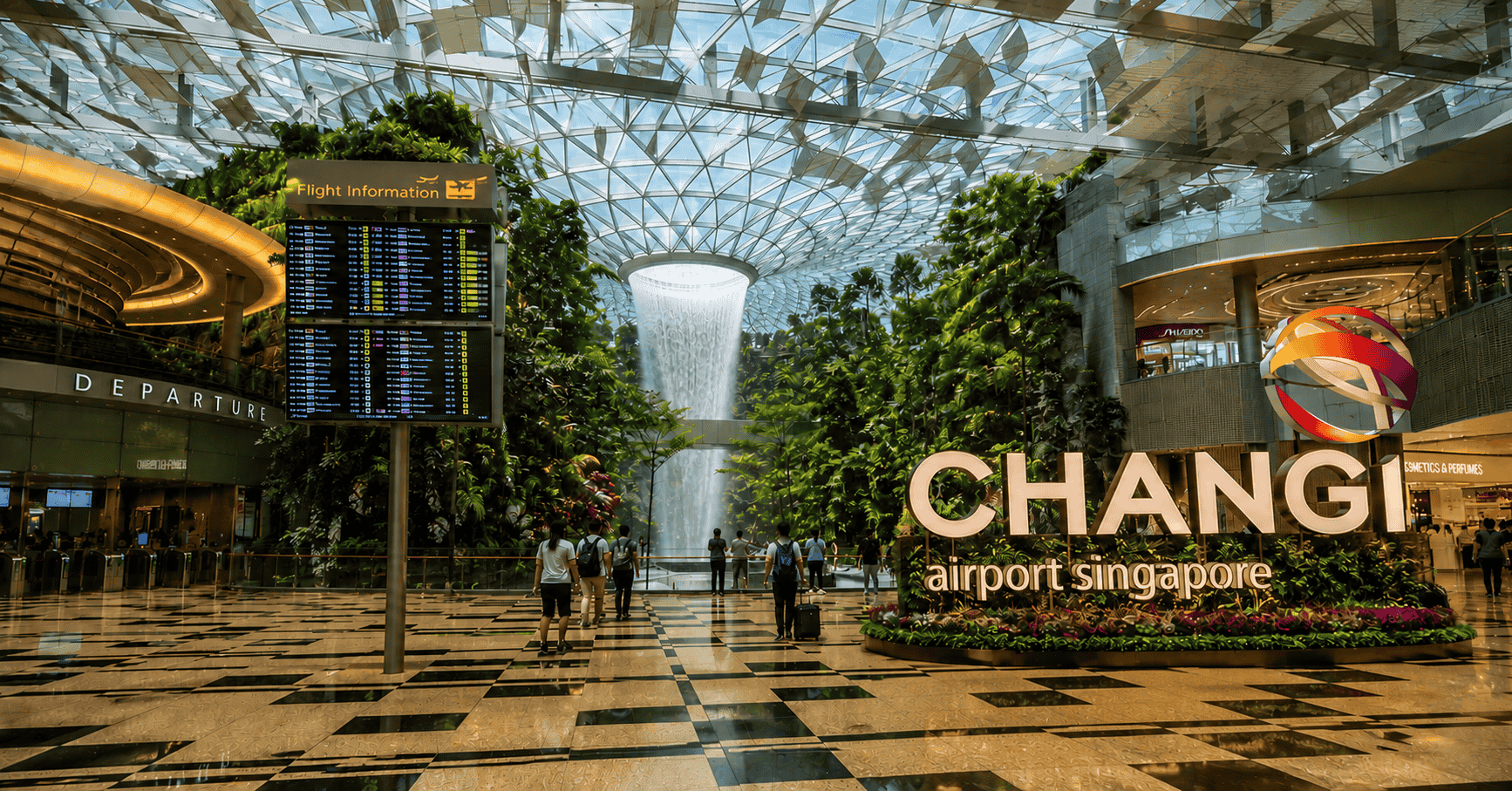
It was opened in 1981 and soon became a globally recognized benchmark for airport innovation, passenger comfort, and operational efficiency, becoming the 16th busiest airport by passenger traffic, and the 4th busiest international airport by seat volume (based on the record by OAG company). Singapore Changi Airport currently operates through four passenger terminals: Terminal 1, Terminal 2, Terminal 3, and Terminal 4.
These terminals respectively serve passenger movement while offering premium amenities. Jewel Changi Airport is an iconic landmark of the airport, featuring the world-renowned HSBC Rain Vortex, indoor gardens, retail outlets, hotels, and dining experiences. Changi is not just an aviation gateway today. It is more like a destination itself, famous for automated immigration lanes, self-service check-in kiosks, smart baggage systems, and contactless boarding procedures.
Changi Airport: Passenger Terminal at a glance
|
Terminal |
Key Highlights |
Passenger Functions |
|
Terminal 1 (T1) |
Oldest terminal with modern upgrades, direct access to Jewel Changi, Cactus Garden, rooftop pool, and premium lounges |
Handles international full-service and long-haul flights; major transit terminal |
|
Terminal 2 (T2) |
Recently renovated with smart technology, digital attractions, themed gardens, and upgraded retail spaces |
Supports regional and international operations with enhanced passenger automation |
|
Terminal 3 (T3) |
Large full-service terminal featuring Butterfly Garden, luxury lounges, and direct hotel connectivity |
Major hub for premium international carriers and wide-body aircraft operations |
|
Terminal 4 (T4) |
Highly automated terminal with biometric check-in, facial recognition, and contactless boarding systems |
Primarily serves regional and selected international airlines with seamless travel technology |
|
Jewel Changi Airport |
Lifestyle and entertainment complex with Rain Vortex, Forest Valley, retail, hotels, and attractions |
Connected to T1, T2, and T3 for shopping, dining, and leisure experiences |
|
Skytrain Connectivity |
Automated train network linking T1, T2, and T3 with scenic views through Jewel |
Enables fast terminal transfers for transit and connecting passengers |
|
Shuttle Transfer System |
Complimentary shuttle buses connecting T4 with other terminals |
Provides inter-terminal transport for passengers outside the Skytrain network |
|
Smart Immigration Systems |
Biometric clearance, automated lanes, and facial recognition technologies |
Accelerates immigration and boarding processes while reducing queue times |
|
Premium Passenger Facilities |
Airline lounges, transit hotels, wellness zones, and VIP services across terminals |
Enhances comfort for business travelers, transit passengers, and luxury travelers |
|
Future Terminal 5 (T5) |
Mega-expansion project with AI-driven systems, sustainability focus, and 50 million passenger capacity |
Designed to support future aviation growth and strengthen Singapore’s global connectivity |
List of airlines operating at Changi Airport
Singapore Changi airport is a major base for more than 100 international carriers, both full-service and low-cost airlines. Not only is it home to Singapore Airlines, it is also a base for its budget alternative, Scoot airline. Changi Airport is one of the busiest airports because of its extensive airline network. It is famed for its diversity, ensuring flexible fare options, frequent flight schedules, and seamless connectivity for travelers. The efficient terminal infrastructure of Changi Airport provides world-class passenger services, whether related to flying economy on a regional route or traveling long-haul in premium cabins.
A snapshot to some major airlines flying from Changi Airport
|
Terminal |
Major airline operating |
Key notes |
|
TERMINAL 1 |
Emirates, British Airways, Qantas, air france, KLM, Japan Airlines, Turkish Airlines |
Major hub for long-haul international airlines |
|
TERMINAL 2 |
Singapore airlines, scoot, lufthansa, ANA, air india, Malaysia airlines, Indigo |
Mix of both regional and international full service carriers. |
|
TERMINAL 3 |
Singapore Airlines, Qatar Airways, United Airlines, Air New Zealand, Vietnam Airlines |
Premium international terminal with extensive long-haul operations |
|
TERMINAL 4 |
AirAsia, Cathay Pacific, Korean air, cebu pacific |
Highly automated terminal focused on regional and budget carriers |
|
TERMINAL 5 |
Planned singapore airlines operations and future partner airlines |
Upcoming mega-terminal meant for future aviation growth. |
check-in at Changi Airport
There are four terminals at Changi Airport designed keeping in mind speed and convenience for travelers, allowing them to access various check-in options, including self-service kiosks, mobile check-in facilities, and automated bag-drop stations. Smart technology infrastructure of Singapore Changi airport makes it easy for travellers not to wait longer in queues and complete their pre-flight procedures efficiently. Some airlines that fly from Changi encourage their passengers to check in online before arriving at the airport. Self-service kiosks help passengers scan their passports, print their boarding pass, and select seats.
An automated bag-drop system at the airport allows travelers to make the process even more streamlined, ruling out manual handling and reducing wait times. Premium travelers who fly in business or first class enjoy dedicated priority check-in lanes and personalized assistance. On the other hand, families with young kids, elderly passengers, and travelers who need accessibility support can access specialised service designed for comfort and convenience.
Efficient integration of security and immigration procedures, implementation of biometric and facial recognition systems at several terminals to support contactless verification and boarding are certain measures and innovations underscoring operational efficiency of Changi airport designed to facilitate smoother airline experience to travelers.
Read Also: Check-In Services at seletar airport (xsp)
Baggage Services at Changi Airport Singapore
Singapore Changi Airport famed for its highly efficient baggage management systems which ensure faster handling, accurate tracking, and reduced delays. The airport handles processing of large passenger volumes by taking resort to advanced automated baggage handling technology while ruling out any compromise on the front of security and operational reliability. Waiting times at baggage claim areas are short. Electronic screens help travelers find out which conveyor belt their checked luggage is delivered to, eliminating guesswork and helping passengers to head to the right carousel in the Baggage Reclaim Hall.
Accommodating airport staff assist passengers with oversized luggage, or who need special baggage or need help regarding missing items. Luggage storage facilities of the airport help passengers who want to explore Singapore during long layovers or before hotel check-in. Provision of baggage wrapping service by the airport caters additional protection to travelers' fragile and valuable items, while porter services help passengers requiring help with multiple bags.
The airport has made available an interline baggage transfer system that automatically transfers the luggage of the travelers to their next flight, helping them avoid rechecking it during layovers. It provides facilities such as Lost and Found counters, airline baggage assistance desks, and customer service centers operational throughout the terminals for travelers needing assistance for their baggage-related concerns.
An overview of Facilities at Changi Airport Singapore
Singapore Changi Airport is world-famous not only for air travel efficiency but also for its exceptional facilities for passengers. Travelers feel welcomed to the wide range of entertainment, dining, shopping, wellness, and relaxation amenities all across the terminals and Jewel changi airport complex.
An iconic attraction of the HSBC Rain Vortex at Jewel, the world's tallest indoor waterfall surrounded by lush indoor gardens and walking trails, nature-themed spaces, such as butterfly gardens, sunflower gardens, and indoor forests are mind-blowing facilities at the Changi airport.
- Wellness amenities such as spas, shower facilities, rest zones, transit hotels, fitness centers, quiet lounges
- Baggage storage, wrapping, and trolley services
- Currency exchange counters and ATMs
- Family and children's play areas, prayer and worship rooms
- Self-service check-in kiosks
- Medical clinics and pharmacy services, and automated bag-drop facilities
- Luxury boutiques, electronics stores, fashion outlets, bookstores, souvenir shops, duty-free retail areas.
- Entertainment facilities that include movie theaters, gaming zones, art installations, interactive play areas, rooftop recreational spaces.
Transport and terminal transfers At Changi Airport Singapore
Airport parking - Singapore Changi Airport offers multiple parking options across all its terminals ensuring convenience for both short-term and long-term travelers. You can select from standard parking, premium parking, and short-stay parking facilities located near terminal entrances for quick access. Passengers can also access covered and open-air parking spaces, while designated pick-up and drop-off areas help travelers ease out their movement during busy travel periods. To locate available parking spaces, there are parking guidance systems for travelers across the airport.
Car rental - There are many international and regional car rental providers travelers can access at Changi airport's terminals. One can find rental counters located within arrival areas, enabling them to arrange vehicles when they land. Options in car rental range from compact city cars to luxury vehicles and family-sized SUVs. Chauffeur-driven limousine services are also available for business travelers and premium passengers wishing a more comfortable transfer experience around Singapore.
Pick-up and drop off - For travelers, there are dedicated pick-up and drop-off zones outside every terminal at Singapore Changi Airport. These areas intend to smoothen passenger movement and are designed for easy curbside access for private vehicles, taxis, and ride-hailing services. If you are using app-based transport services like Grab, you can access designated ride-share pick-up points at the spot near arrival halls. No problem in identifying correct zones for arrivals and departures, thanks to clear signage across the airport.
Public transport - Changi Airport is well-connected to the city through the country's highly efficient public transportation network. The MRT or Mass Rapid Transit system provides direct rail access from the Changi airport MRT station to prime areas across Singapore. Travelers can also use public buses operating regular routes between the airports and major commercial, residential and tourist districts.
Skytrain connectivity - The automated skytrain system of Changi provides fast and seamless terminal connectivity between Terminals 1, 2, and 3. The trains remain functional throughout the day and help transit passengers move without hassles between gates, lounges, and baggage areas. It also offers scenic views of Jewel Changi Airport during certain routes.
Taxi and ride-hailing services - Travelers can access taxi stands outside all passenger terminals at the Changi Airport. These stands operate 24 hours a day for arriving and departing passengers. They can use metered taxi for downtown Singapore and surrounding regions, while premium taxi and limousine services are also available. Platforms like Grab, Gojek, and TADA are widely used for ride-hailing at the airport.
Terminal transfers - Changi Airport provides efficient and clearly marked transfer systems for passengers transferring between terminals at the airport. While the Skytrain connects all three terminals, complimentary shuttle bus services operate between terminal 4 and the other terminals. Transfer routes aim to reduce transit time and support hassle-free international connections. Travelers with long layovers can also access transit hotels, lounges, shopping areas, and entertainment facilities without leaving the airport premises.
Read More: Singapore Changi Airport transit guide | Top airlines operating from Singapore Changi Airport
A snapshot to Changi Airport’s Lounges
|
Lounge |
Location |
Availability |
|
SilverKris Lounge |
Terminal 2 & Terminal 3, Transit Area |
Open daily for Singapore Airlines premium passengers |
|
KrisFlyer Gold Lounge |
Terminal 3, Transit Area |
Available for Star Alliance Gold members and eligible travelers |
|
SATS Premier Lounge |
Terminal 1, Terminal 2 & Terminal 3 |
Accessible through Priority Pass and selected airlines |
|
Plaza Premium Lounge |
Terminal 1, Arrival & Transit Areas |
Open 24 hours with paid access options available |
|
Ambassador Transit Lounge |
Terminal 2 & Terminal 3, Transit Area |
Offers shower facilities, dining, and resting spaces |
|
Emirates Lounge |
Terminal 1, Transit Area |
Exclusive access for Emirates First and Business Class passengers |
|
Qantas Singapore Lounge |
Terminal 1, Transit Area |
Premium lounge for Qantas and eligible Oneworld passengers |
|
Cathay Pacific Lounge |
Terminal 4, Transit Area |
Lounge access for Cathay Pacific premium travelers |
|
Marhaba Lounge |
Terminal 1 & Terminal 3 |
Pay-per-use lounge with dining and relaxation facilities |
|
Private Room by Singapore Airlines |
Terminal 3, Transit Area |
Ultra-premium lounge exclusively for Singapore Airlines First Class travelers |
Jewel Changi Airport: A visceral landmark
Jewel Changi airport is one of the most recognised landmarks and a key reason many travelers prefer to choose routes through Changi airport. It came into existence with a grand opening on October 18, 2019. It is basically a nature-themed entertainment, retail and mixed-use lifestyle complex connected directly to Terminal 1, 2, and 3.
Jewel draws attention worldwide because of its massive glass-and-steel dome and the Rain Vortex which happens to be the tallest indoor waterfall in the world. It is a 10-storey complex blending an indoor rainforest with a bustling urban center. The tall structure integrates thousands of trees, plants, and walking trails beneath the gigantic dome.
One look at Jewel and you marvel at the idea of how a combination of engineering and nature can transform an airport experience into something resembling a luxury urban attraction rather than just a transit facility. What’s more, the structure encases extensive retail spaces, international restaurants, rooftop attractions, family entertainment zones, walking nets, mazes, and premium accommodation options.
Transit passengers with long layovers usually spend hours savouring the beauty of Jewel without leaving the airport vicinity. It actually symbolizes the country's vision of combining sustainability, tourism, commerce and infrastructure into multifunctional public spaces.