- 10 Jan, 2026
Transit through Singapore Changi Airport feels smoother than transit at most major international airports, but many travelers still underestimate how complicated the experience can become. Long walking distances, gate security delays, immigration confusion, and overnight exhaustion create problems that most travel guides rarely mention.
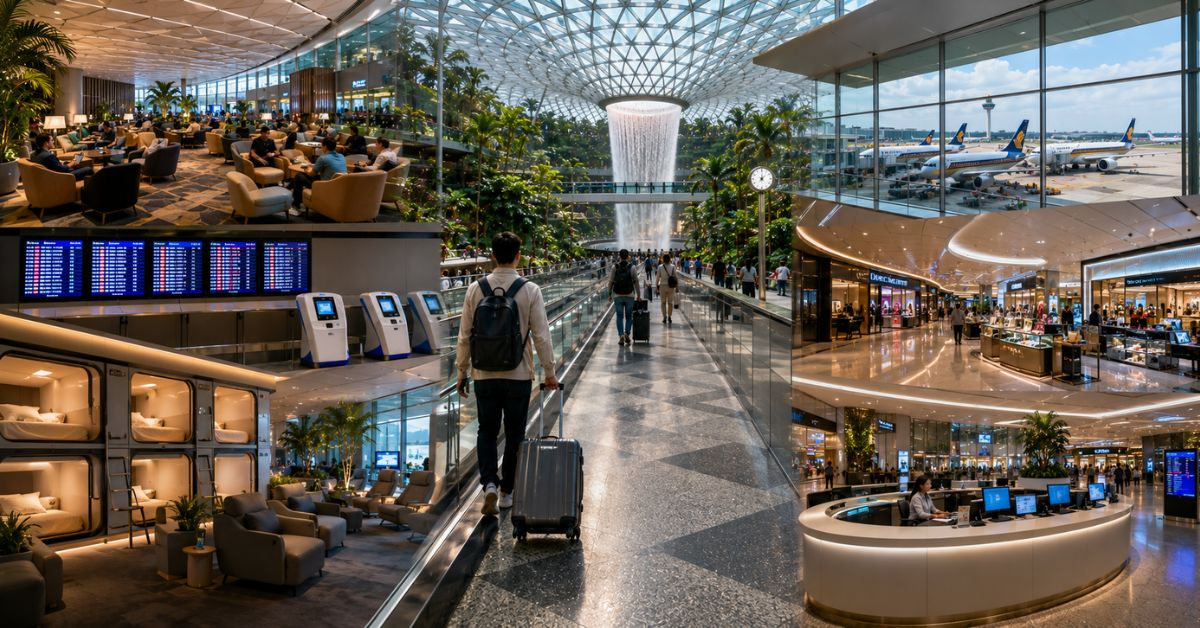
Social media usually presents Changi as a luxury travel destination rather than a functioning transit hub. Travelers see the indoor waterfall, rooftop gardens, luxury lounges, and designer stores. What they do not see are people rushing across terminals after underestimating transfer times or struggling to find a quiet place to rest during a six-hour overnight layover.
Changi remains one of the best airports in the world for transit passengers. The airport operates efficiently, stays remarkably clean, and offers far more comfort than most international hubs. Still, the quality of your experience depends less on the airport itself and more on how well you prepare for your layover.
This guide focuses on the practical side of transit at Changi. It explains what travelers usually learn too late and how you can avoid common mistakes before your next connection through Singapore.
1. Transit at Changi Feels More Like a Small City Than an Airport
The first thing most travelers really underestimate is the size of Changi Airport. The place functions almost like a small city, with multiple terminals, shopping areas, transit hotels, gardens, restaurants, and entertainment zones strung together through trains and long walking corridors, you know. Everything works efficiently, but that efficiency does not always mean speed. Sometimes it feels smooth, yet it still takes a bit longer than you expect.
Travelers with shorter layovers often think they can shift between terminals fast without doing the usual checks on the walking distance first. But, in truth, some transfers turn out way slower than you’d guess once you count escalators, Skytrain pauses, crowded hallways, and those annoying gate relocations too.
One traveler is coming in from Frankfurt, planning to stop by Jewel during a two-hour layover. Immigration lines, plus the terminal trek and then security screening, basically ate up most of the whole window. When the traveler finally got to the departure gate, it was only a few minutes before their next boarding started.
The airport itself ran smoothly. The travel idea, well, that’s where everything didn’t quite work.
Smart travelers look up their next gate right after landing. Not after wandering around first, or planning afterward.
2). Jewel Changi During Transit: Visa, Time, and Baggage Considerations
Many travelers assume Jewel sits inside the secure transit area because social media videos make access look effortless. That assumption creates problems every day.
Jewel is tied into the public side of the airport, so basically most transit passengers must clear immigration before they can even get in there. If you don’t hold a visa for Singapore, you might not get a chance to visit Jewel during a short layover, unless you have cleared all the formalities.
And even if you’re fine for visa-free admission, you still need enough time to get out of the terminal, pop over to Jewel, and then go back through the security screening again.
With a two-hour layover, it’s not possible the you will end up with a relaxed visit. Most people need like four to six hours to experience Jewel without constantly hurrying or feeling that continual pressure.
Also, double-check baggage transfer rules before you exit the transit zone. A few airlines make passengers pick up luggage and then recheck it manually, so it’s not always an automatic situation.
3). Spending the Night at Changi Airport: Reality vs. Expectations
Changi offers a complete different overnight experience than most airports, but travelers still underestimate how tiring overnight transit becomes after multiple long-haul flights.
The terminals remain active all night. Cleaning crews continue working, announcements play regularly, and new passengers arrive regularly from international routes. Quiet rest areas exist, but they fill quickly during busy travel periods.
Temperature also becomes a problem for many travelers. The airport air conditioning feels comfortable during the day but noticeably colder overnight after several inactive hours.
Travelers who expect hotel-quality sleep inside public seating areas usually struggle the most.
Experienced transit passengers prepare differently. They carry light jackets, portable chargers, headphones, and offline airport maps before arriving. Small decisions like these improve overnight comfort significantly.
4). Best Things to Do During a Layover at Singapore Changi Airport
Changi encourages travelers who are passing by to wander through gardens, movie theaters, gaming areas, art displays, and shopping zones during the transit stretch. The whole airport vibe feels pleasant because there is always something happening to look at.
But the issue is that many travelers kind of stop tracking the time once they start exploring.
Some attractions are spread across several terminals and transit zones, so passengers end up walking more than they planned. Like, tirelessly walking towards departure can quickly turn into a quick pause at a photo booth, turning that visit into a memory.
Frequent travelers treat the airport attractions as optional little side quests, not as a sure thing you will definitely catch. They usually go for rest, proper meals, charging devices, and finding the departure gates before they even think about exploring anything else.
5). Food and Dining Tips for Transit Passengers at Singapore Changi Airport
Many travelers assume airport food pricing stays consistent across terminals. Changi works differently.
Premium restaurants and cafes near busy gates tend to cost quite a bit more than calmer ones tucked deeper inside the terminal areas. People with tight layovers, rushing between doors, usually pick convenience over value and then end up spending much more than they need to, surprisingly.
Changi still has excellent food quality compared with most airports, especially for Asian meals, but the smart move is to look around before you buy on the spot from the nearest outlet. That quick little exploration can be a big difference.
Water refill stations also help travelers avoid unnecessary spending during long layovers.
6). Singapore Changi Airport Lounge Guide for Transit Passengers
Airport lounges at Changi look really impressive online, but when you get there, the real vibe depends a lot on timing and how crowded it is at that time. Some lounges, during major international departure waves, can turn into a bit of a mayhem situation, and travelers who were expecting calm privacy sometimes just can’t locate a truly empty spot. This gets especially noticeable inside the Priority Pass lounges that everyone seems to use, so yes, it can feel… squeezed.
In most transit cases, the really helpful lounge advantages tend to be showers, solid charging points, quieter seating options, and Wi-Fi that just works, more than some fancy dining spread. So it’s worth checking lounge status and conditions before you show up, rather than assuming every “premium” lounge gives the same experience.
7). Singapore Changi Airport Security Guide for Transit Passengers
Many travelers make the mistake of wandering too far from departure gates because they assume Changi uses centralized security checkpoints like other airports.
Instead, many flights use gate-based security screening directly before boarding.
Passengers who continue shopping or eating until the final boarding call often encounter long security queues near the gate. This creates unnecessary stress and increases the risk of missing boarding deadlines.
Smart travelers arrive near the gate much earlier than they normally would at other international airports.
8). Sleeping at Changi Airport: Transit Hotel vs. Public Rest Areas
Many passengers assume they can book transit hotels or sleep pods after landing. During peak travel seasons, that strategy rarely works well.
Transit hotels inside Changi fill quickly because long-haul passengers value proper rest during extended layovers. Travelers arriving late at night often discover that quiet sleeping spaces have already sold out.
Public rest areas help for short naps, but they do not replace private sleeping rooms for travelers dealing with jet lag or overnight connections.
Booking rest spaces before arrival creates a much smoother transit experience.
9). Singapore Changi Airport Wi-Fi Guide for Transit Passengers
Changi provides strong free Wi-Fi compared to many international airports, but performance still changes during busy periods.
Travelers working remotely during transit sometimes struggle with slower speeds near crowded gates and lounges. Charging stations also become difficult to access during peak departure times.
Digital nomads and business travelers usually have the best experience when they identify quieter work areas away from central waiting zones.
The airport supports remote work well overall, but travelers should still prepare backup charging options during long layovers.
10.) Family-Friendly Facilities at Singapore Changi Airport
Families traveling with children often experience Changi differently from solo travelers.
Parents manage strollers, tired children, snacks, entertainment, bathroom breaks, and changing schedules during transit. Even a well-designed airport becomes exhausting when children become restless after long flights.
Play zones and family facilities help significantly, but walking distances between terminals still create challenges for parents managing luggage and young children simultaneously.
Families benefit most from longer layovers because rushed connections increase stress quickly.
11). Singapore Changi Airport Transit Tips for Short Connections
Travel blogs often make short Changi layovers sound easy because the airport operates efficiently. In reality, tight connections still create pressure.
Gate changes, delayed arrivals, crowded transfer corridors, and security screening all reduce available transit time quickly. Travelers with one-hour international connections often spend most of the layover walking instead of resting.
Even experienced travelers prefer larger transit buffers whenever possible because unexpected delays still happen at every major airport.
Efficiency helps, but efficiency does not remove time limitations.
12). Best Time to Transit Through Singapore Changi Airport
The airport atmosphere changes dramatically throughout the day.
Morning periods often feel organized but crowded with business travelers and international departures. Afternoon hours usually bring heavy tourist traffic, while overnight periods become quieter but more physically exhausting.
Travelers planning long layovers should understand that crowd levels directly affect food queues, lounge access, rest availability, and terminal movement speed.
The same airport can feel calm or overwhelming depending on your arrival time.
13). Discovering Hidden Rest Areas at Singapore Changi Airport
Many passengers stay near their departure gate during transit because they never explore beyond the obvious shopping areas.
Some of the best rest corners, quieter seating sections, hidden charging points, and less crowded food zones sit farther away from busy terminals. Travelers willing to walk slightly farther often find much calmer spaces.
Experienced transit passengers usually know that quieter airport areas provide more comfort than crowded central lounges or busy waiting gates.
Sometimes the best airport experience comes from avoiding the busiest sections completely.
14. Luxury and Stress Still Exist Together at Changi
Changi looks impressive, but the airport still cannot remove the physical stress of international travel completely.
Jet lag, delayed flights, dehydration, overnight fatigue, and travel anxiety still affect passengers regardless of how modern the airport feels. Travelers sometimes expect the airport itself to eliminate transit stress automatically because of its global reputation.
That expectation creates disappointment.
The airport improves transit comfort significantly, but realistic planning still matters more than luxury branding.
Travelers who pace themselves carefully usually enjoy the airport much more than travelers trying to experience every attraction within limited transit time.
15). Smart Transit Strategies for Singapore Changi Airport Travelers
The biggest lesson most travelers learn at Changi is that preparation matters more than airport reputation.
The airport provides excellent facilities, strong organization, modern infrastructure, and better comfort than most global transit hubs. Even so, poor timing decisions still create missed experiences, rushed boarding, unnecessary stress, and overnight exhaustion.
Travelers who manage transit successfully usually follow the same approach. They check gates immediately after landing, understand immigration rules beforehand, plan realistic movement times, secure rest early, and leave extra buffer time for security screening.
Changi can genuinely make long-haul travel easier, but the airport works best for travelers who plan conservatively instead of assuming everything will happen automatically.
The experience feels remarkably smooth when you move through the airport calmly rather than rushing constantly between terminals, attractions, restaurants, and boarding gates.
That balance makes the biggest difference during transit through Singapore.
Conclusion
Transit through Singapore Changi Airport can feel remarkably smooth compared to most international airports, but the experience still depends heavily on preparation, timing, and realistic expectations.
The airport offers excellent facilities, modern infrastructure, and far more comfort than most global transit hubs. Still, long walks, overnight fatigue, immigration rules, and gate security procedures create challenges that many travelers only discover after arriving.
The best Changi transit experiences happen when travelers plan conservatively instead of assuming the airport will solve every logistical problem automatically.
If you understand the layout, manage your time carefully, and prioritize rest over rushing between attractions, Changi can genuinely make long-haul transit easier and less stressful. Most importantly, it allows travelers to recover during international journeys rather than simply endure them.
Frequently Asked Questions(FAQ's)
Ans: Yes. Singapore Changi Airport is well organized and designed to make transfers between terminals very easy. Since the terminals are quite large, it's a good idea to check your departure gate as soon as you land, and give yourself plenty of time to move between terminals if needed.
Ans: Yes, but a couple of things need to line up first: you'll need to be eligible to enter Singapore, and have enough transit time to spare. Since Jewel is located outside the secure transit area, you'll have to clear immigration to get there, and then go back through security when you return to catch your flight.
Ans: It's recommended to have at least 4 to 6 hours for your layover if you're planning to visit Jewel. Anything shorter might leave you tight on time to clear immigration, actually enjoy exploring, and make it back to your departure gate without rushing.
Ans: Yes. You'll find charging stations pretty much all over the airport terminals, making it easy to charge your devices during a layover. That said, they may be occupied during peak travel times, so it's always smart to carry a power bank as backup, just in case.
Ans: Yes. Beyond the designated rest zones at the airport, you'll also find quieter seating areas located away from the busiest gates and shopping spots, giving you a more peaceful environment to relax during the layover.