- 06 Aug, 2026
You may not believe this but in most Hollywood movies that I watched, the scene always felt real to me where a stray bullet shot by a bad guy accidentally creates a little hole inside the plane, sucking every passenger right out of it.
Later, I came to know that there is no such thing as a small hole sucking passengers out of the airplane, because it is technically not possible, as per the source.
So, here I am writing this blog to debunk some myths, misconceptions, or rumors surrounding an air travel.
Debunked: 10 Air Travel Myths Most People Still Believe
Myth 01. If an airplane is caught in turbulence, it will crash or fall out of the sky!
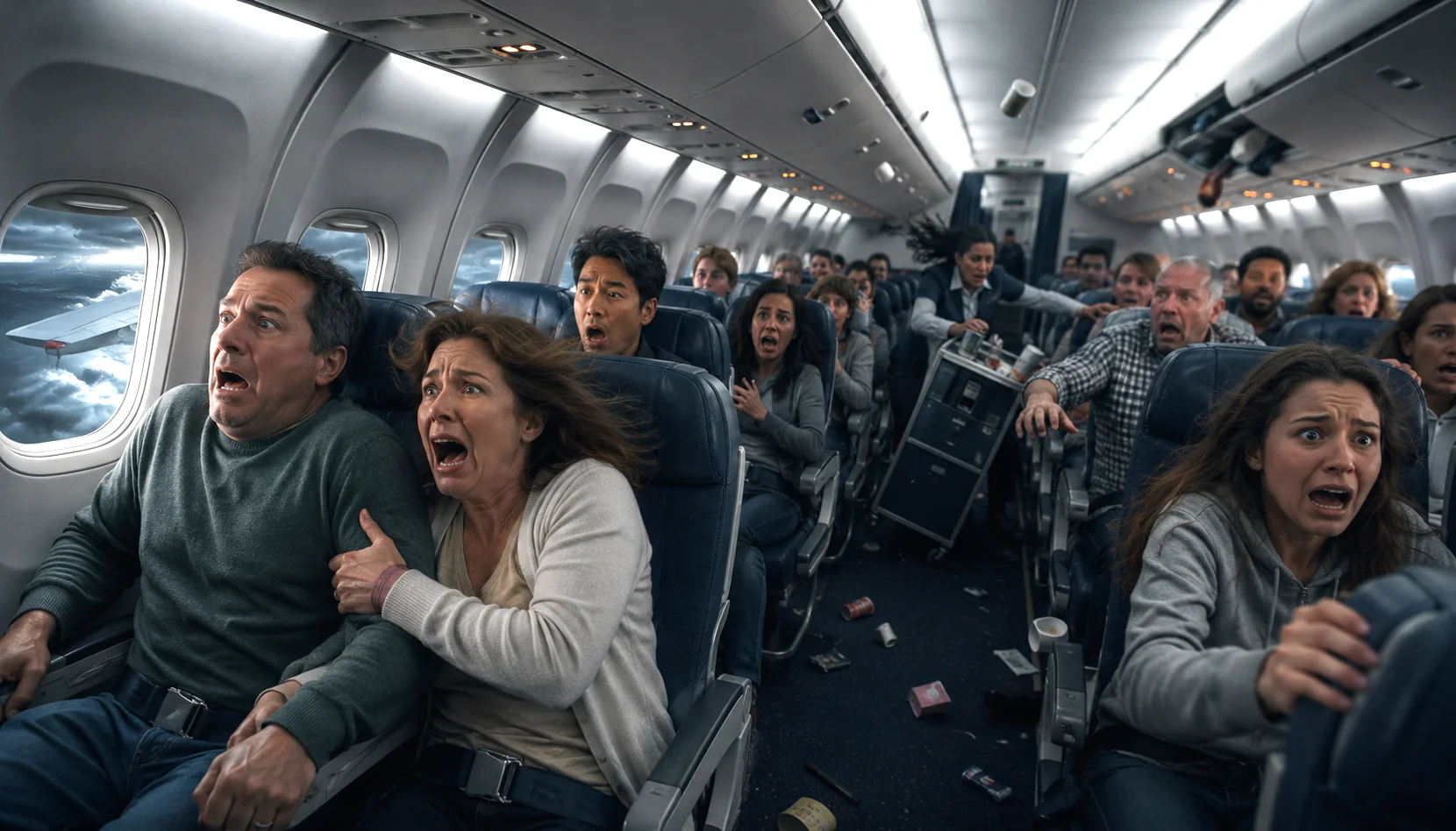
This is one of the most common myths surrounding air travel, where people still believe that if the flight gets caught in severe turbulence mid-air, only God or miracle will save it from falling out of the sky. While it is granted that nobody likes turbulence, nervous fliers refuse to show calmness, believing the plane will crash or be flipped upside down!
Reality - Modern aircraft are built to withstand turbulence far stronger than what passengers normally experience. Therefore, a plane can’t be flipped upside-down or thrown into a tailspin or flung from the sky due to turbulence, or even the strongest air pocket.
Not only this, have you seen pilots worried when turbulence hits the plane? No, because they receive weather updates throughout the flight, which means they can change altitude or route to avoid encountering severe turbulence whenever possible. If it is unavoidable, commercial aircraft are engineered to handle that safely.
Myth 02. If you don't turn your cell phone off, it will cause a plane crash or malfunction.
This is another myth surrounding air travel and even makes a great deal of trouble for fellow passengers who believe this. Interestingly, nobody knows from where they got that kind of idea.
Reality - Airplanes are built to withstand foreign signals, and the thing with cell phones is that they operate on totally different frequencies.
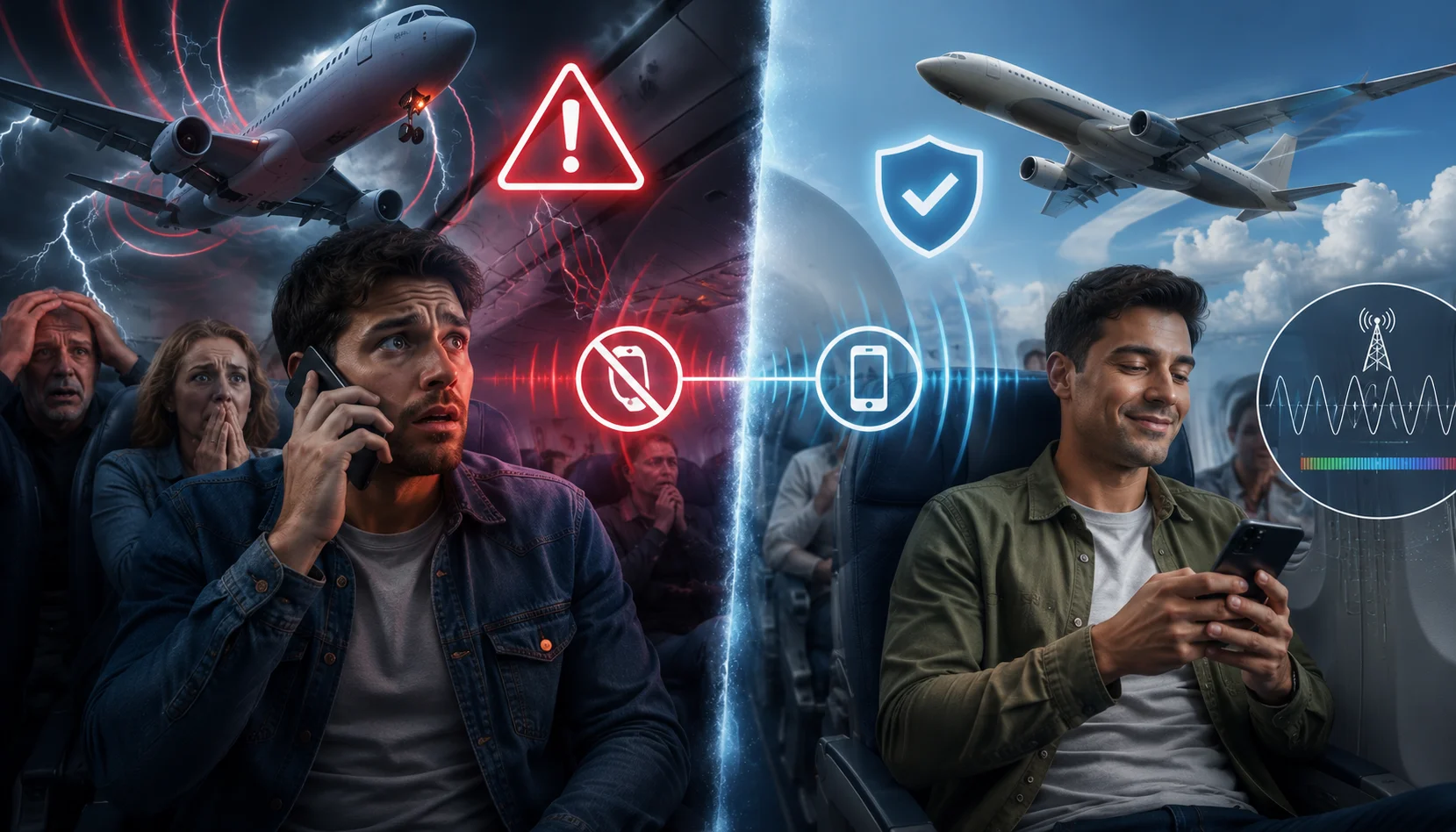
When a call is made at 10,000 feet, the signal bounces off several available cell towers, not one at a time. Moreover, modern aircraft are not built so flaccidly. Sophisticated engineering done to them also includes heavy shielding that protects sensitive navigation and communication equipment of the plane from external radio frequencies.
And most importantly, there has been no confirmed report of an aviation accident claiming that a cell phone that was left turned on by a passenger caused the accident. So, there is no need to worry if you accidentally leave your cell phone turned on or forget to put it on airplane mode.
However, if there are any instructions from the flight you are boarding in this regard, do heed them.
Myth 03. Airlines will increase the price if you keep searching for the same flight.
Airlines actually do not increase the price based on your individual search history or browser cookie.
Reality - Prices change because of inventory updates or errors with an airline’s website.
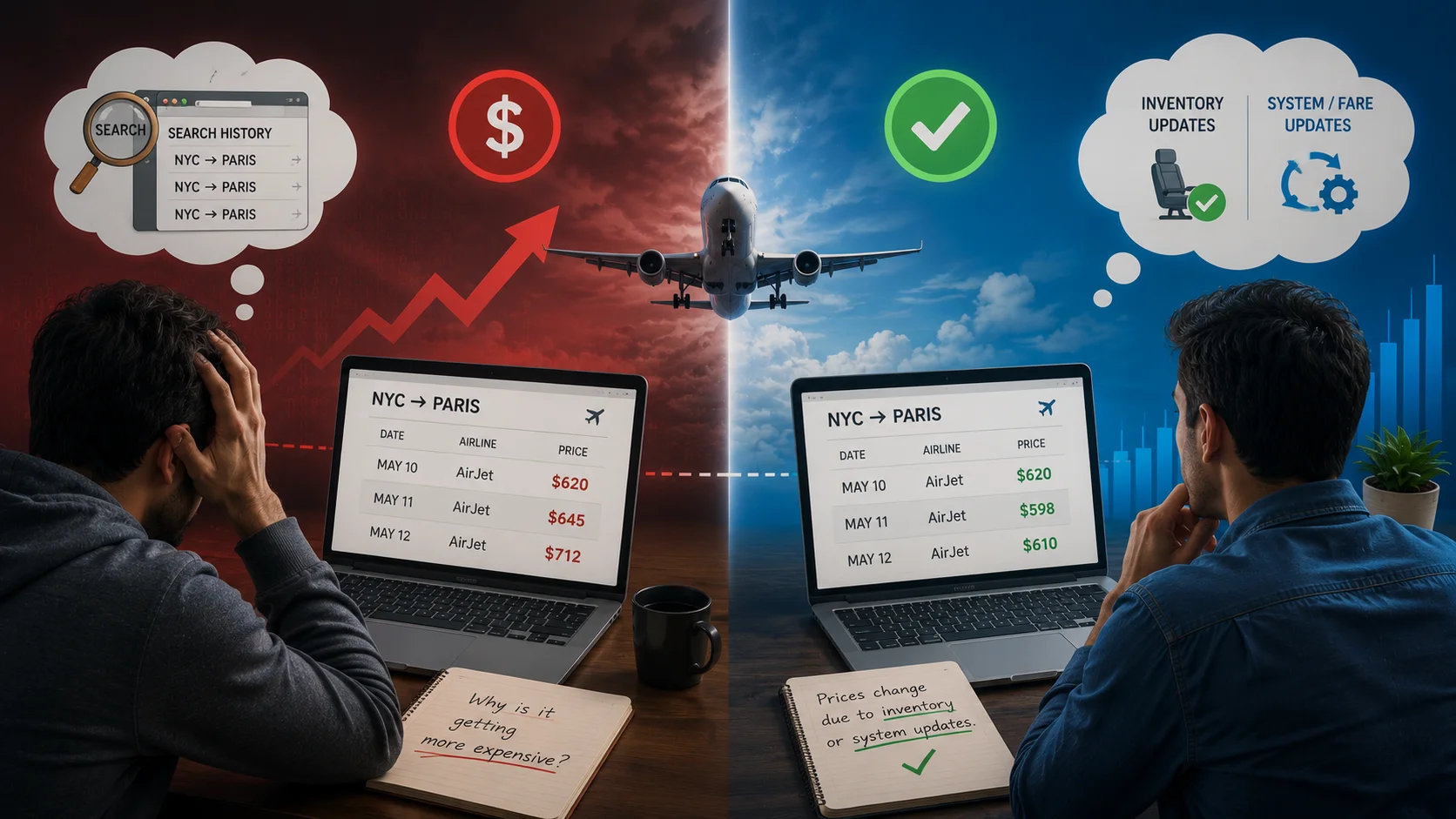
There are a number of factors that cause price fluctuations in air tickets. For instance, when the cheapest seats are sold out, the airline’s system automatically shows the next, more expensive tier to everyone. Another factor is when many travelers view or book the exact same route at the same time, prices are likely to increase. And lastly, ticket prices naturally rise when you try to book at the near ending of your travel date.
Myth 04. Cabin air is unhealthy and can make passengers sick.
In contrast to the notion that cabin air is infected with germs that can make passengers sick, it is actually clean and healthy.
Reality - Aircraft cabins often have cleaner air than most offices and shopping malls.
This is because commercial airlines take air quality very seriously. Most of them have True High-Efficiency Particle Filters (True HEPA) or High-Efficiency Particle Filters (HEPA) to ensure it remains healthy. But it doesn’t mean that everything you touch in the airplane is well-sanitized.
Myth 05. It is the pilot who flies the entire plane manually.
This is another myth surrounding air travel. Most people think that pilots fly the entire flight manually. I guess, most of them may have got this notion through movies where pilots are shown manually operating an entire plane and also trying to reassure the frightened passengers that everything is okay in the face of turbulence.
Reality - Pilots do not fly the entire commercial flight manually. They use automated autopilot systems for much of the flight and take manual control during takeoff and landing.
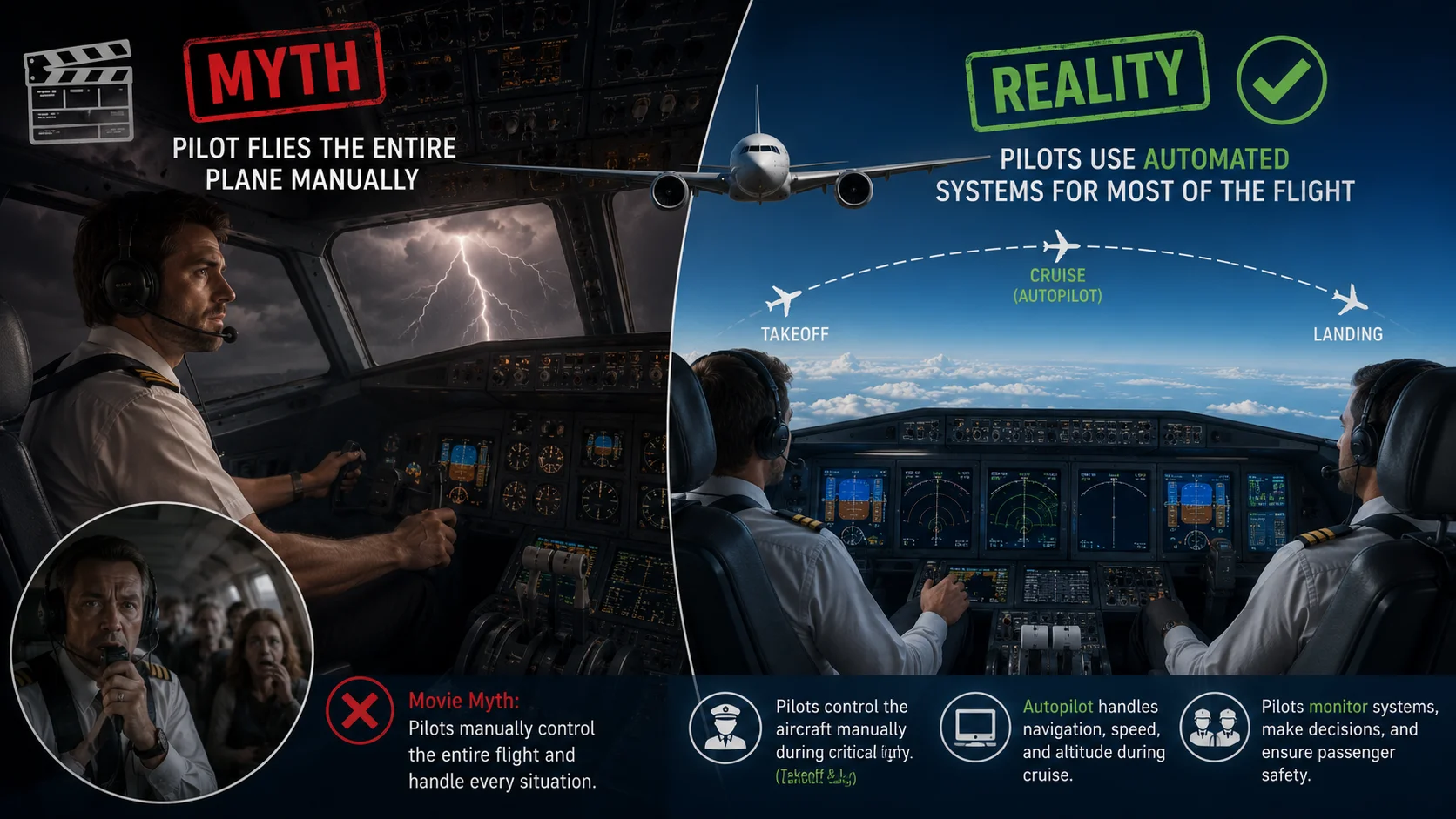
Modern science and technology has made it possible for building more advanced and sophisticated systems for airplanes helpful in aerial navigation, altitude, and route management during cruise.
But it doesn't mean to say that the role of a pilot is non-essential. They are like an AI engineer supervising the performance of a reinforced machine learning algorithm and taking charge only when the algorithm deviates from its programmed behavior.
Therefore, the pilots continuously supervise the aircraft’s performance, communicate with air traffic control, manage weather-related situations if something feels off the hook, and take control of the flight whenever necessary.
Myth 06. Airline companies pay you for all the losses if your baggage is lost.
The reason this is a myth that airlines reimburse you for all the losses if your baggage is mishandled or lost is because this notion stems from the people who are not aware of the fine print on an airline’s baggage policy.
Reality - Airlines do not pay travelers for all the losses when their baggage is mishandled or lost. It is subject to legal liability, caps and specific rules on what qualifies for compensation.
In fact, many airlines do not allow you to transport valuable items in your checked baggage, which literally means that if you lose your bag containing the valuables, they will certainly not pay you for those losses.
However, it doesn't mean that airlines completely refuse reimbursement. It is just that they will not pay for everything for your loss. They pay up to a specific legal limit and also deduct value for older, used items.
Myth 07. You get unlimited oxygen from the oxygen masks on a plane.
Remember the specific scene in the movie: Mission Impossible 2 - where the frightened passengers start wearing oxygen masks followed by turbulence mid-air?
I know you may have watched so many movies where passengers are shown wearing masks during an emergency.
The point is - have those scenes made you believe that the oxygen masks run an endless supply of oxygen?
Well, it may have or may not have, but there is surely a myth surrounding it, that these masks do not run out of oxygen.
Reality - The oxygen masks in airplanes provide breathable oxygen for only 12 to 20 minutes. They don’t supply endless oxygen.
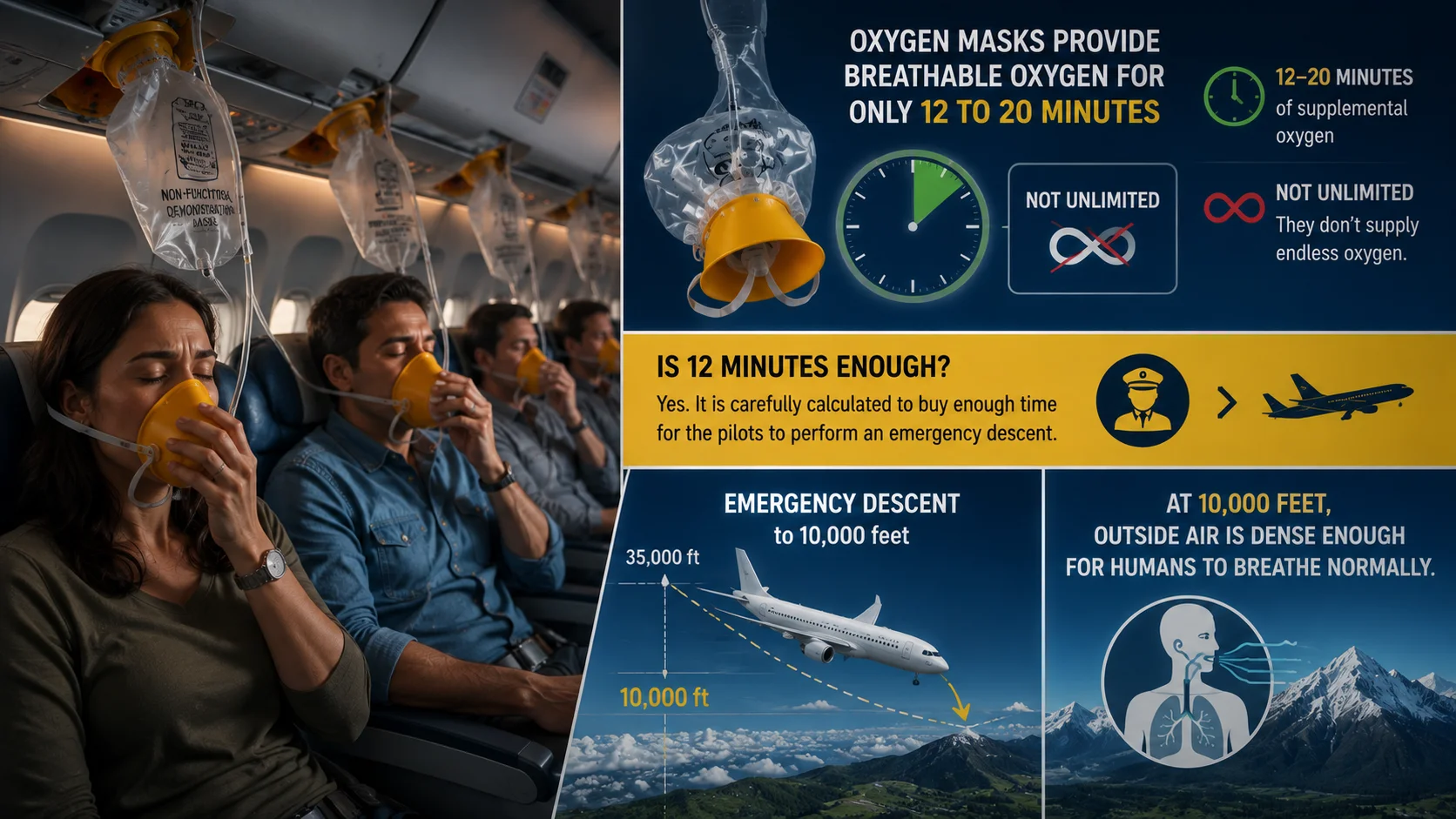
Does that mean a 12-minute window is not enough?
Well, it is carefully calculated to buy enough time for the pilots to perform an emergency descent to the altitude of 10,000 feet where outside air is dense enough for healthy humans to breathe normally.
Myth 08. If the flight gets cancelled, travelers will get free hotel or meal vouchers.
Reality - Cancelled flights do not give you the guarantee that you will avail free hotel and meal vouchers, as it depends on who is at fault for the cancellation and your airline’s specific rules.
The point is, if the flight gets cancelled due to the fault of the airline, like mechanical failures or maintenance issues, it is legally obligated to provide free meal vouchers for the extended wait times. Also free include complimentary hotel rooms plus transport if you are stranded overnight.
Moreover, if the cancellation happens due to severe bad weather, natural disasters, or air traffic control restrictions, airlines are still legally obligated to cover your meals or hotel costs during extended or overnight delays. However, that depends on the country’s aviation regulations.
Myth 09. Anybody can open a cabin door during a mid-flight.
Reality - Nobody can open a cabin door during a mid-flight. It is humanly impossible.
Why is it impossible?
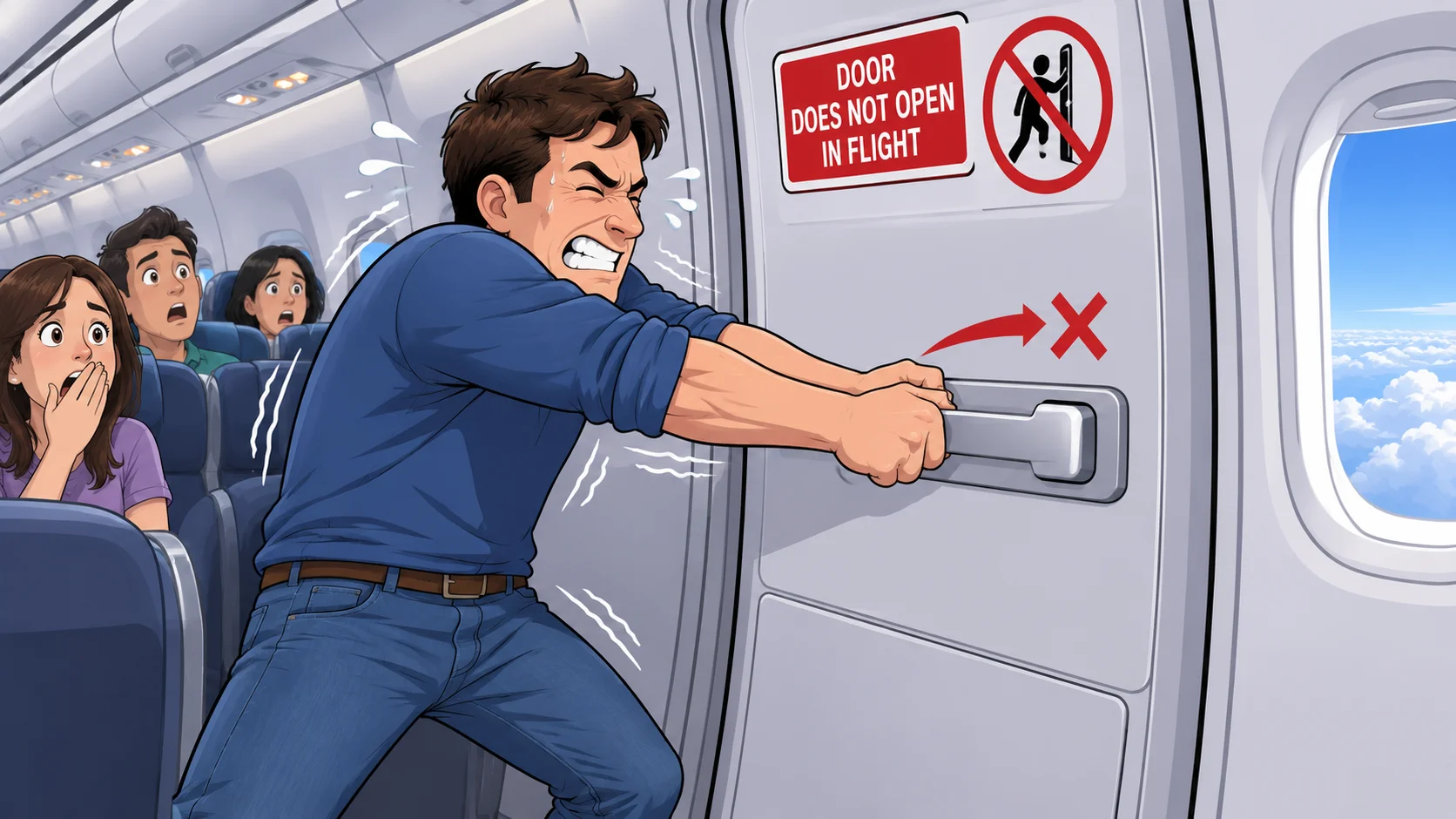
Because a flight at the cruising altitude of 30 to 35,000 feet gathers air pressure inside its cabin. The air pressure is much higher than the thin air. So, the difference in the air pressure makes an outward push against the door, creating 15 to 25,000 of force that seals the cabin door tightly into its frame.
In other words, the pressure is so intense that it is physically impossible for a human to pull the door inward, unless they have Superman-like strength.
Myth 10. Airplanes may have a dedicated cooking kitchen to serve in-flight meals.
I am not sure how many people believe this myth, but questions like this are floating around on different social platforms, including Quora.
Reality - Commercial airplanes do not have dedicated cooking kitchens. They have galleys to store, chill, and reheat pre-cooked food.
So, the fact is, airplanes do not have a dedicated cooking kitchen to serve in-flight meals. In fact, these meals are fully or partially cooked in large industrial catering facilities on the ground hours before flight departure.
The pre-cooked food is then rapidly chilled, or frozen and packed into containers, loaded onto specialized trucks and delivered straight to the aircraft.
Interestingly, the airplane galley has high-powered convection ovens to reheat the chilled meals at high altitudes. The flight attendants use wheeled trolleys to store and serve the meals down the aisle.
Some Notable and Interesting Facts Related to the Airplanes:
- Most commercial airlines serve their pilots and co-pilots different meals. This is intentionally done to avoid both pilots getting sick at the same time due to a possible contaminated food.
- A black box of an aircraft is not black. It is painted a bright orange to ensure it is found easily among the wreckage or deep water (post airplane crash).
- An aircraft is hit by lighting most of the time, yet it flies on.
- In-flight food tastes different because a human’s taste buds do not work the same way when the flight is at a high altitude.
- Not everything you touch in an airplane is clean. Most of them are not regularly sanitized during flights. Examples include tray tables, seat pockets, carpets.
- The flight attendants maintain hawk-eyed vigilance, nothing escapes from their attention.
- Cabin lights are dimmed during takeoff and landing to help passengers adjust their eyes to darkness in case of an emergency.
- The airplane tires are stronger than you think. They can handle insane speed and pressure.
- An airplane’s Galley is not just for coffee, meals, and drinks. It is a secret hideout for the flight attendants to debrief, gossip and breathe.
- The perfect smiles you see on the faces of flight attendants? They are trained smiles, as cabin crew have to go through rigorous smile drills. But they are not fake.
- Planes do not drop human waste from mid-flight. There is a sealed storage unit for it in the back of the plane. Once it lands, the waste gets siphoned out and is discarded into the ground sewage system.
- You do not get more drunk when the airplane reaches a higher altitude.
- Searching for the same flight time and again does not trigger a price increase.
Frequently Asked Questions(FAQ's)
Ans: No, severe turbulence can’t crash a plane, thanks to the cutting-edge engineering done to modern aircraft. They can withstand turbulence far stronger than they usually come across.
Ans: Yes, but it would be helpful if you follow the airplane’s instructions in this regard. While it is safe to use a phone during a flight, following any instruction set forth by the airline makes good civic sense.
Ans: Airlines overbook some flights to compensate for no-shows and last-minute cancellations. This is their calculated strategy of anticipating that some passengers will not check-in or show-up.
Ans: Yes, they are well-trained for situations like emergency evacuations, firefighting, first aid, CPR, security procedures, etc.