Qantas Airways Guide 2026: Flight Booking, Policies & Best Deals
Qantas Airways Limited is a commercial carrier of Australia, operating a vast network of domestic and international flights. This Australian flag carrier is the largest in Oceania by fleet size, international flights, and global destinations. It is considered the second-oldest operating airline in the world. Originally, it is registered as QANTAS (Queensland and Northern Territory Aerial Services Limited) and is broadly regarded as the leading long distance airline in the world and one of the best strongest brands in Australia.
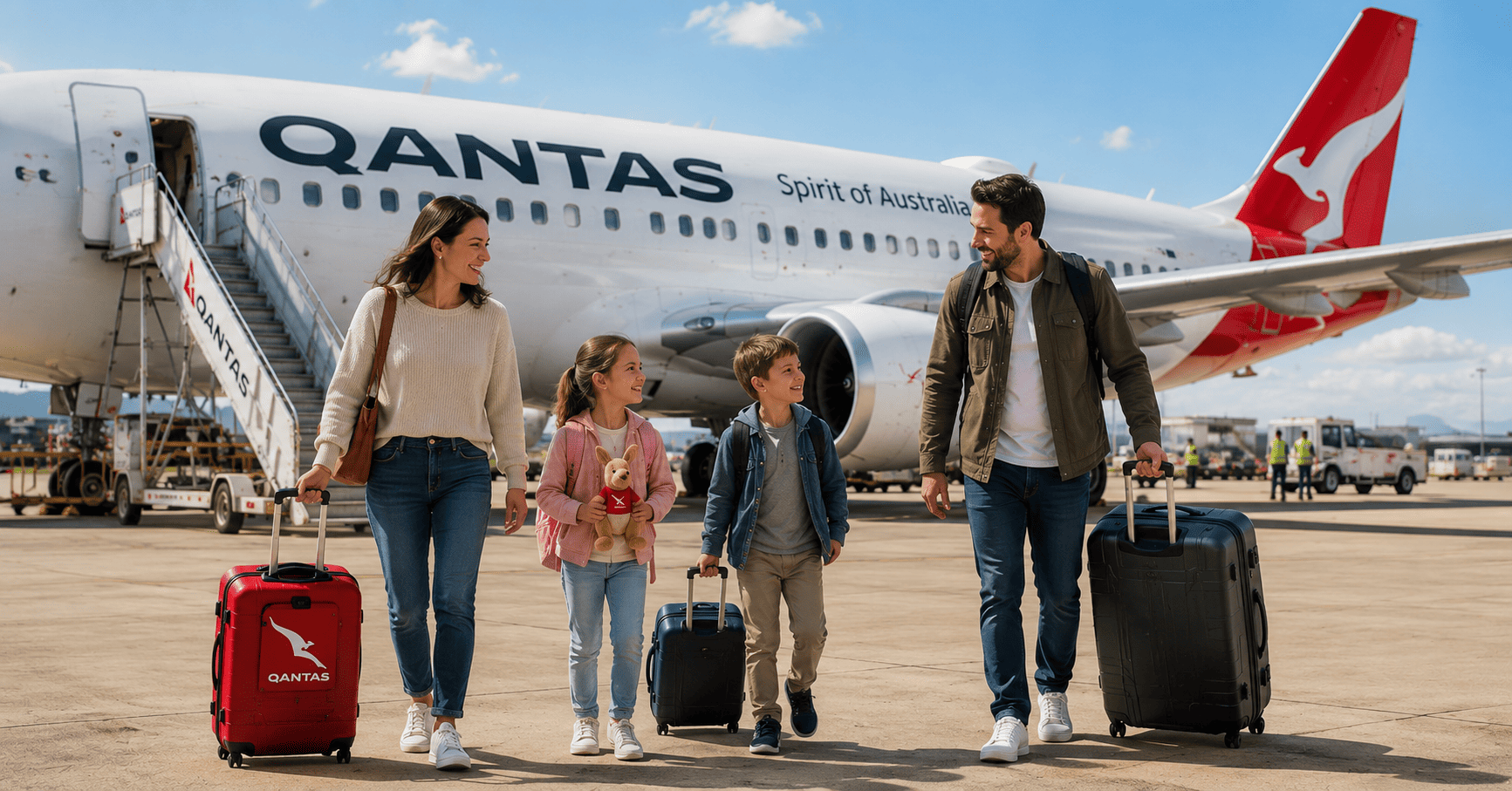
Qantas Airways Fleet Details and History
The history of Qantas goes back to 1920 where it was founded by Hudson Fysh and Paul McGinness along with Fergus McMaster. Initially, the airline served as an outback air taxi and mail service in Queensland. It started its first scheduled commercial passenger and mail service in 1922. It suffered quite an operational stalemate during Covid-19 pandemic, when the airline had to suspend all its international flights and 60% of its domestic flights, as well as grounding over 150 of its aircraft due to the government-imposed travel restrictions.
Qantas Airways mainly operates from four hub airports across Australia, with Sydney Kingsford Smith Airport representing its primary hub and international gateway. This airport is an integral part of Qantas’ operations by handling a significant portion of its domestic and long-haul international traffic, connecting travelers from Australia to different international destinations across Asia, Europe, North America and the Pacific region. Also, Sydney Airport is the corporate headquarter of Qantas, allowing the airline to maintain seamless connections between domestic and international services, thanks to the massively robust and extensive infrastructure of the airport. Apart from Sydney airport, the second most popular hub airport for Qantas is Melbourne airport, playing an instrumental role in supporting both domestic and international operations for the airline. In addition to these two , other airports from where Qantas fly are Brisbane, Perth, Adelaide, Darwin, and Cairns. These airports collectively contribute to strengthening the broader presence of Qantas airline across Australia, connecting regional travelers with major global destinations while maintaining strong domestic coverage throughout the country.
Clarification: Some may argue that Perth is the second most popular hub airport for Qantas but technically, it serves as a hub for long-haul and Western Australian routes, operating on a smaller scale compared to Melbourne.
Qantas has earned a distinct identity for its ability to operate one of the most advanced and diversified mainland fleet of more than 140 aircraft, including a mix of Airbus A330s, A380s, Boeing 737s, and Boeing 787s that it strategically deploys based on route length, passenger demand, and operational requirements. The airline is going through a massive fleet renewal program in which it is phasing out the aging Boeing 737s and onboarding next-generation aircraft, like the Airbus A220, A321XLR, and A350-1000 for long-haul routes. The renewal program of the airline involves a serious priority of improving fuel efficiency, passenger comfort and environmental sustainability while maintaining high standards of reliability and operational performance.
Major aircraft in the Qantas fleet:
-
Boeing 737-800
-
Boeing 787-9 Dreamliner
-
Airbus A330-200
-
Airbus A330-300
-
Airbus A380-800
-
Airbus A220-300
-
Airbus A321XLR
-
Airbus A350-1000 (future operations)
The Boeing 787 Dreamliner serves as a backbone of Qantas' global flights, whereas the Airbus A380 busiest international routes. On the other hand, the Boeing 737 fleet remains a significant player for the airline. More details on this reference guide - Qantas fleet.
Qantas Airways (QF) Destinations and Routes
Qantas maintains one of the largest route networks in the Southern Hemisphere. It serves over 100 destinations across 26 countries in the Asia-Pacific, North America, Europe, and South Africa through its own services and strategic airline partnerships, offering extensive connectivity for both leisure and business travelers. The route network of the airline is also made satisfactory and enjoyable for the travelers through its membership in the Oneworld Alliance and countless codeshare agreements.
On the home front, Qantas airline connects every major metropolitan center to regional and remote communities, making it one of the most comprehensive aviation networks in Australia. As a matter of fact, Qantas showcases its strength on the key areas, such as Australia domestic routes, Australia-Asia corridors, Australia-North America services, Australia-Europe connections, and (commercial aviation paths) Trans-Tasman routes between Australia and New Zealand. Here's a detailed guide on Qantas international route network.
Top Qantas Domestic & International Destinations
Qantas Airways flies to most of the world's most popular travel destinations, making it one of the most preferred choices for both domestic and international travelers. On the home front (Australia), cities like Brisbane, Sydney, Melbourne, Perth and Adelaide remain among the busiest destinations for Qantar due to strong business and tourism demand. Internationally, Singapore acts as Qantas' largest hub outside of Australia and its third largest hub overall. It serves as a significant point, mostly for the famous "Kangaroo Route" between Australia and Europe. Other popular destinations in Asia include Tokyo, Hong Kong, Bangkok, and Bali. In Europe, London remains one of the flagship routes of the airline. Paris and Rome are the destinations drawing significant leisure traffic. Across North America, cities including Los Angeles, Dallas, New York and San Francisco continue to be among the most frequently traveled international destinations for Qantas. More on the reference guide: Qantas destinations.
Top 21 Airlines routes from Singapore by Qantas Airways
Discover premium routes between Singapore and major hubs.

QF - Qantas
SIN
Nov 12, 2026
18:45

DPS
Nov 13, 2026
10:30
QF - Qantas
SIN
Nov 5, 2026
19:30
PER
Nov 6, 2026
15:15
QF - Qantas
SIN
Nov 9, 2026
19:30
SYD
Nov 10, 2026
10:20
QF - Qantas
SIN
Nov 22, 2026
18:45
AVV
Nov 24, 2026
07:55
QF - Qantas
SIN
Dec 1, 2026
23:40
BNE
Dec 2, 2026
21:35
QF - Qantas
SIN
Nov 16, 2026
19:40
OOL
Nov 17, 2026
14:50
Qantas Airways Operating Model
The operating model of Qantas is more of a dual brand strategy of pairing a premium full service carrier (Qantas) for corporate travelers with low-cost arm (Jetstar) for price-sensitive leisure travelers. It is more like an airline-within-an-airline business model of the airline in which the airline targets both ends of the aviation market, one that is premium, another one that is affordable.
To ensure it stays ahead of the curve in the aviation industry, Qantas airline exerts concentrated focus on bringing excellence to its wide range of services within its ticket offerings, such as checked baggage allowances, onboard meals on many routes, inflight entertainment and loyalty benefits. With this approach, the airline focuses on catering to premium leisure travelers, business passengers and corporate clients. Adding further, the core component of the airline's business strategy lies in its hub-and-spoke network that paves the path for efficient movement of travelers between domestic and international markets.
Key features of Qantas Operating Model:
-
Full-service airline offering
- Hub-and-spoke network structure
- Strong domestic market leadership
- Premium long-haul operations
- Membership in the Oneworld alliance
- Extensive codeshare partnerships
- Integrated loyalty ecosystem
- Dual-brand strategy through Qantas and JetStar
Read also: Scoot Airlines Operating Model
What makes Qantas a preferred travel carrier?
Qantas has earned an uncontested global reputation through decades of operational excellence, service quality, and innovation. One of the most recognised strengths of the airline is its commitment to safety of the passengers when choosing Qantas for both domestic and international journeys. In addition, the airline has also earned global reputation for its extensive network of connectivity, along with direct services, alliance partnerships, modern aircraft, premium cabin products and quality inflight dining, coupled with advanced entertainment systems, and award-winning airport lounges.
Qantas holds unquestionable reliability among travelers for its top-of-the-line customer service standards, and robust loyalty programs. Comfort, convenience and global reach are the core competencies Qantas is often chosen by travelers, whether they are flying for business or leisure.
Affordable months to fly with Qantas Airways
The most affordable months to fly with Qantas generally fall during the off-peak shoulder seasons, especially June and November. These are the periods witnessing the rise in travel demand. However, these months are not uniform global data and so, they vary depending on Qantas routes. For instance, March is historically the most affordable month to fly with Qantas, especially when booking a flight from India to Australia.
Qantas cabin classes
Qantas offers different types of cabin classes focusing on serving different travel preferences and budgets. Each cabin is designed in a way providing an apt balance of comfort, service and value.
Economy Class
International Economy class is available on all mainline passenger aircraft of Qantas. It features a 3-4-3 seating configuration with ergonomic cushions and adjustable headrests. It includes 12-inch seat-back touchscreens with complimentary movies and shows, along with personal USB charging and AC power outlets. All tickets in the International Economy Class include meals, or snacks, along with complimentary beverages. Most Economy tickets on international routes (excluding North/South America routes) feature a checked baggage allowance of up to 23 kg.
Key Features at a glance:
-
Complimentary meals and beverages
- Comfy seating
- USB charging and AC power outlets
- Inflight entertainment with movies and shows
Premium Economy
Premium Economy class has the benefits of having enhanced dining experience and dedicated cabin service. Premium Economy is offered on Airbus 380, Airbus A380, and Boeing 787 Dreamliner on selected routes between Australia and dream destinations around the world including Asia, Europe, New Zeeland, North America and South Africa. It offers streamlined check-in, priority boarding, and access to a dedicated premium economy cabin with personalized service from a dedicated cabin crew.
The cabin features enhanced recline, leg and footrests, and complimentary noise-cancelling headphones for added comfort. Passengers can also enjoy multi-course dining, premium beverages, and an extensive inflight entertainment section, apart from amenities like comfort kit, wool blanket, pillow, and Wi-Fi on selected aircraft.
Key Features at a glance:
-
Wider seats
-
Extra legroom
-
Personal space
-
Greater recline
-
Streamlined check-in and priority boarding
-
Dedicated premium economy cabin
Business Class
Flying with Business class means an elevated journey designed for relaxation or productivity with Qantas. It offers streamlined check-in, priority boarding, faster baggage handling and access to Qantas business lounges and eligible partner lounges before the flight departure. The purpose is to enhance the premium flying experience of travelers by combining comfort, productivity and personalized service.
The onboard experience features a dedicated business cabin, premium Australian-inspired dining, and curated wine selection, aside from attentive service of the staff throughout the journey. The international business cabin features spacious suites, award-winning dining and caring service designed to make long-haul flight of passengers comfortable and stylish. Also to be experienced include fully flat beds up to 80 inches in length on selected Airbus A380, Airbus A330, and Boeing 787 Dreamliner aircraft.
Key Features at a glance:
- Direct aisle access in a 1-2-1 configuration.
- Dedicated business cabin
- High-definition entertainment screens
- USB charging ports
- Power outlets
- Amenities including luxury amenity kits, pajamas on selected routes, pillows, blankets, and premium inflight entertainment.
First Class Cabin
The first class cabin is designed to give a new definition of effortless luxury with exclusive lounges, suites, a-la-carte dining designed to make your traveling more comfortable and enjoyable. This class offers the most exclusive and luxurious travel experience by combining personalised service, premium ground facilities, and exceptional onboard comfort.
Enjoy streamlined check-in, priority boarding, award-winning lounges featuring fine dining, premium beverages, spa treatments, and private workspaces. If traveling with Airbus A380, passengers experience spacious First Suites with a fully flat bed, massage functions, luxury bedding and the option to dine with a travel companion.
Key features at a glance:
- Streamlined check-in
- Priority boarding
- Award-winning lounges featuring fine dining, spa treatments etc.
- On-demand gourmet dining
- Premium wines and champagne
- Designer sleepwear
- Aesop amenity kit
Qantas baggage policy What is allowed, what is not
Qantas includes checked baggage with most fares, but the allowance depends on factors like travel class, destination, route type, and Frequent Flyer status. The airline uses both weight-based and price-based baggage systems depending on the region of the travel. For most international destinations outside North and South America, passengers can divide their baggage across multiple bags as they remain within their total weight allowance. However, no single checked bag can weigh more than 32kg.
Checked baggage allowance
Understand the Qantas checked baggage allowance for Economy, Premium Economy, Business, and First Class. Baggage limits vary by travel class and destination, while eligible Frequent Flyer members may receive additional baggage allowances based on their membership tier.
Economy Class
- Australian domestic: 1 piece up to 23 kg
- North and South America - 1 piece up to 32 kg
- International - Up to 30 kg total weight
Premium Economy
- Australian domestic - 2 pieces up to 32 kg each
- North and South America - 2 pieces up to 32 kg each
- International - Up to 40 kg total weight
Business Class
- Australian domestic - 2 pieces up to 32 kg each
- North and South America - 2 pieces up to 32 kg each
- International - Up to 40 kg total weight
First Class
- North and South America - 3 pieces up to 32 kg each
- International - Up to 50 kg total weight
Note: Frequent Flyer members may qualify for extra baggage allowances depending on their membership tier.
What is allowed in checked baggage?
Passengers can pack the following items in the checked baggage, provided they comply with the airline and security regulations:
- Clothing and personal belonging
- Footwear and accessories
- Toiletries within permissible limits
- Sporting equipment
- Musical instruments
- Baby strollers and infant travel items
- Mobility aids and medical equipment
- Electronics packed according to safety needs
Note: Non-perishable food items are allowed but they are entirely governed by the customs, biosecurity, and agricultural regulations of your specific destination. Passengers are also allowed extra infant equipment, including collapsible strollers, portable cots, bassinets, and approved child car seats for travelers flying with infants.
What is not allowed in checked baggage:
- Explosives and fireworks
- Ammunition and explosive devices
- Flammable liquids and fuels
- Gas cylinders and compressed gases
- Toxic or poisonous substances
- Corrosive chemicals and acids
- Radioactive materials
- Oxidizing substances
- Certain lithium batteries and power banks
- Hazardous chemicals and dangerous goods
- Self-balancing devices containing prohibited battery configurations
Passengers are advised to take cognisance of ensuring that the items classified as dangerous goods comply with the aviation safety regulations and whether they require special approval before the travel.
Size and Weight Restrictions
- Domestic flights: Maximum total dimensions of 140 cm (length + width + height)
- International flights: Maximum total dimensions of 158 cm (length + width + height)
- No individual bag may exceed 32 kg, regardless of cabin class or membership status.
Read also: Checked-in baggage All Nippon Airways (ANA)
Qantas Important Baggage Guidelines
- Do not forget to label all checked baggage with your name and contact information before travel.
- You are expected to carry valuables, medications, travel documents, keys, and other essential items in carry-on baggage rather than checked luggage, as recommended by Qantas.
- If you need additional baggage than what is included in the allowance, purchase it online before your flight departure. It will come at the cost lower than airport excess baggage fees.
Qantas Airways Check-in Details
Understand Qantas check-in options, including online, airport, priority, and self-service services, along with check-in deadlines, mobile boarding passes, and baggage drop procedures for a seamless journey.
Online Check-In
Keeping in mind the peace and comfort of travelers, Qantas offers online check-in through its website and mobile app so that travelers can complete the check-in process without taking the trouble of visiting the airline office. It is worth noting that the online check-in opens 24 hours before the scheduled flight departure and remains open until 30 minutes before domestic flights and 90 minutes before international flights. Meanwhile, you can confirm your booking, select or change seats, update travel details, and access your digital boarding pass before arriving at the airport.
Key Highlights:
- Available via Qantas website and mobile app
- Opens 24 hours before departure
- Closes 30 minutes before domestic flights
- Closes 90 minutes before international flights
- Allows seat selection and booking management
- Digital boarding pass available after check-in
Airport Check-In
Passengers who find it difficult to check in online can complete the process at the check-in counters of the airport, which is quite useful for travelers who need assistance in document verification, special assistance, traveling with unaccompanied minors, and also for those travelers requiring help with baggage services.
Qantas customer service agents at both domestic and international terminals are readily available to extend any sort of assistance pertaining to your check-in process.
Key Highlights:
- Available at domestic and international terminals
- Assistance for baggage drop and document verification
- Support for special assistance requests
- Recommended for passengers with complex itineraries
- Staff available to help with travel-related queries
Mobile Boarding Pass
Eligible passengers who have completed online or app check-in will receive a digital boarding pass that they can store directly on their smartphone. This pass is an essential document entailing flight details, gate information and boarding updates. In a bid to make your traveling easier in terms of avoiding carrying a paper ticket, you can consider adding your boarding pass to the digital wallet of your smartphone for easy access at security checkpoints or boarding gate, when navigating the airport.
Key Highlights:
- Available after online or app check-in
- Accessible through the Qantas App
- Can be saved to Apple Wallet or Google Wallet
- Includes gate, seat, and boarding information
- Reduces the need for printed travel documents
Read also: Singapore Airlines Check-in Guide
Self-Service Kiosks and Bag Drop
Qantas provides self-service kiosks at many airports. Therefore, passengers who are traveling with checked baggage can get assistance by using kiosks. For instance, after checking in online, they use print baggage tags at the kiosk, attach them to their luggage, and proceed to the designated bag-drop area. These kiosks also come useful for the international passengers to review flight information, modify seat assignments, and update Frequent Flyer details before proceeding through security.
Key Highlights:
- Available at selected domestic and international airports
- Print boarding passes and baggage tags
- Dedicated bag-drop facilities
- Faster than traditional counter check-in
- Allows quick seat and flight detail updates
Priority Check-In
Qantas enables premium passengers and eligible loyalty members to access dedicated check-in facilities for First Class, Business Class, Premium Economy travelers, Qantas Frequent Flyer elite members. The Qantas Club members and eligible oneworld status holders are given the leeway of accessing priority check-in counters to reduce their wait times and make their airport experience more streamlined.
Key Highlights:
- Available for First Class, Business Class, and Premium Economy passengers
- Accessible to eligible Qantas Frequent Flyer members
- Available for Qantas Club members
- Eligible oneworld status holders may also qualify
- Dedicated counters with shorter queues
Recommended Arrival Times
To ensure that nobody misses their flight and make it a smooth departure experience, Qantas recommends passengers to arrive well before their scheduled flight. Domestic travelers should generally arrive at least one to two hours before departure. On the other hand, international passengers should ensure arriving approximately three hours before departure. Following this will make it easy for them to have enough time for completing formalities like check-in, baggage processing, security screening, and immigration formalities.
Key Highlights:
- Domestic flights: Arrive 1–2 hours before departure
- International flights: Arrive approximately 3 hours before departure
- Additional time may be required during peak travel periods
- Early arrival helps avoid last-minute delays
- Essential for passengers with checked baggage or special assistance requests
Qantas flight changes and cancellation policy
Learn about the Qantas flight delay and cancellation policy, including passenger assistance, rebooking, refunds, flight credits, schedule changes, compensation, connecting flights, and third-party bookings. Stay informed about your rights and available travel options during unexpected flight disruptions.
Flight delays
If a Qantas flight is delayed, you will be informed regarding this by the airline through the Qantas App, SMS, and email with fresh updates about your flight information. Depending on the specific nature of the disruption, the airline in all likelihood will assist you with meals, accommodation, or transport. The type of support offered also depends on whether the delay is within the control of Qantas and the duration of the disruption.
Key Highlights:
- Delay notifications sent via app, SMS, and email
- Updated itinerary provided automatically
- Meal, transport, or accommodation assistance may be available
- Support depends on the cause and length of the delay
Flight Cancellations by Qantas
If your flight cancellation happens by Qantas, it will generally rebook you on the next available Qantas flight to your destination without applying any further charge. If the alternative travel arrangements by the airline do not satisfy your expectations, you may request a refund instead. Additional assistance may also be offered depending on the circumstances of the cancellation.
Key Highlights:
- Automatic rebooking on the next available Qantas flight
- No additional charge for rebooked travel
- Refund option available if passengers no longer wish to travel
- Additional support may include meals, transport, or accommodation
Schedule Changes
If Qantas makes a change to a scheduled flight, it will send you updated flight details through email and SMS. You can review and accept the revised travel itinerary by taking the help from the Manage Booking section. If you are not happy with the new schedule, alternative options such as another flight, a Flight Credit, or a refund may be available.
Key Highlights:
- Flight change notifications sent by email and SMS
- Updated itinerary available in Manage Booking
- Passengers can accept or review alternative options
- Flight Credit or refund may be offered in eligible cases
Compensation and passenger assistance
Qantas maintains professional conduct when it comes to assisting travelers when delays or cancellations occur, particularly when the disruption is within the airline's control. Adequate support offered by the airline can include meal vouchers, accommodation, transportation, or reimbursement of reasonable expenses. However, it also depends on the situation and location of the passenger.
Key Highlights:
- Assistance varies based on the cause of disruption
- Meal vouchers may be provided during extended delays
- Hotel accommodation may be arranged for overnight disruptions
- Transport assistance may be available when required
- Additional consumer rights may apply under local regulations
Refund Eligibility
Refund is likely to be given to the passengers when the airline itself cancels a flight and expresses its inability to provide alternative arrangements. It may also occur in the event, when a significant schedule change occurs. It may occur, when a delay causes the traveler to abandon their trip, or when a confirmed passenger cannot be carried as booked. Refund amounts are generally based on the unused portion of the ticket.
Key Highlights:
- Refunds available for eligible cancellations and major schedule changes
- Applicable when alternative arrangements are unsuitable
- Unused tickets may qualify for a full refund
- Partially used tickets may qualify for a partial refund
Flight Credits
In a situation where passengers do not want to travel because of a schedule change or disruption, Qantas may offer a Flight Credit instead of a refund. How it is made available also depends on the ticket conditions and the specific circumstances of the disruption.
Key Highlights:
- Offered on eligible bookings
- Can be used toward future travel
- Depends on applicable fare rules and conditions
Refunds for Seats and Additional Services
If a flight is cancelled by Qantas, passengers may also request refunds for additional travel purchases related to that booking, including prepaid seat selections and additional baggage allowances.
Key Highlights:
- Refunds available for prepaid seats
- Additional baggage purchases may be refunded
- Online refund requests can be submitted for eligible extras
Connecting Flights
Under this policy of Qantas, if your connecting flights are on a single ticket, the airline will rebook you automatically if an issue occurs. But if your connecting flight is on a separate ticket, you must contact Qantas for options.
Key Highlights:
- Alternate connections offered for same-booking itineraries
- Separate bookings may require direct assistance from Qantas
- Rebooking options depend on availability
Third-Party Bookings
If you have booked your Qantas flight through a travel agency, online travel agency, or another third-party provider, you should contact the original booking provider regarding schedule changes, cancellations, refunds, or rebooking options. The airline may assist you for disruptions occurring close to departure.
Key Highlights:
- Contact the original booking provider for changes and refunds.
- Applies to travel agencies and online booking platforms.
- Qantas may assist with disruptions occurring within 72 hours of departure.
Lounge Invitations and Travel Add-Ons
If a flight is delayed or cancelled up to 24 hours before the scheduled flight departure, the airline may reinstate the complimentary Qantas Lounge Invitations to unused status. For hotel or car rental bookings made through third-party providers, passengers should contact those providers directly regarding any changes or refund requests.
Key Highlights:
- Eligible lounge invitations may be reinstated.
- Hotel bookings must be managed with the accommodation provider.
- Car rental changes must be handled with the rental company directly.
Qantas Loyalty Programs
-
Qantas Frequent Flyer - This is the largest loyalty program in Australia designed for individual consumers, allowing them to earn points through flying, credit card spending, dining, and retail partners. It allows passengers to access several benefits including lounge access, and status credits.
- Qantas Business Rewards - This program is designed for small to medium-sized businesses, allowing them to earn rewards and points on everyday business expenses. It allows both businesses and individual employees to earn Qantas Points on the same flight and business expenses.
Frequently Asked Questions(FAQ's)
Ans: Yes. Qantas is a premium, full-service airline. It is Australia’s national carrier and a founding member of the oneworld alliance. The airline offers a wide range of services, including providing baggage allowances, onboard meals on many routes, entertainment, and premium travel services.
Ans: The main hub of the airline is Sydney Airport, while Melbourne Airport is its major secondary hub.
Ans: Yes. Qantas operates international flights across Asia, Europe, North America, New Zealand, the Pacific Islands, and other regions.
Ans: Qantas offers Economy, Premium Economy, Business Class, and First Class on selected routes. ,Arrive 1–2 hours before domestic flights and 3 hours before international departures.
Ans: Yes, they can. See our section “online check-in” for more details.
Ans: Arrive 1–2 hours before domestic flights and 3 hours before international departures.
Ans: Yes. The airline allows passengers to carry cabin baggage, but they should do so in compliance with the route-specific and fare-specific limits.
Ans: It is called the loyalty program of the airline, allowing members to earn and redeem points for flights, upgrades, hotels, and other rewards.
Ans: Yes, you can use your accumulated Qantas points for eligible flight upgrades.
Ans: Yes. It is a founding member of the oneworld alliance and maintains numerous codeshare partnerships.
Ans: They are allowed but fees and fare differences may apply.
Ans: Very simple. Use the ‘Manage Booking’ section on the website of Qantas or using a mobile app. Choosing or changing your seat may be complimentary or chargeable depending on your fare type.
Ans: Yes, and you can avail this on the majority of its domestic Boeing 737 and Airbus A330 flights within Australia. It is currently not available on international flights.
Ans: Special meals like vegetarian, glutten-free, kosher etc. can be requested up to 24 hours before your scheduled flight departure by placing your request through the “Manage Booking” section online.